RELIGION, NATION, MARRIAGE: THE LOYALTIES OF MEN
PRAY, WORK, STUDY, PROTECT: THE DUTIES OF MEN


Showing posts sorted by relevance for query pakistan. Sort by date Show all posts

Monday, September 28, 2015

Map on Monday: PAKISTAN

The Physical Ecology, Communal Loyalties, and Geopolitics of Pakistan

by David Pence and A. Joseph Lynch


Physical Ecology: Natural Resources and Physical Geography

Hidden underneath Pakistan's diverse physical geography lies the fault line which divides the Indian and Eurasian tectonic plates. The physical area of Pakistan makes it more than twice the size of California and slightly larger than Texas. Pakistan can be divided into three zones: the highlands in the far north, the Baluchistan plateau in the west, and the Indus River plain in Pakistan's east.

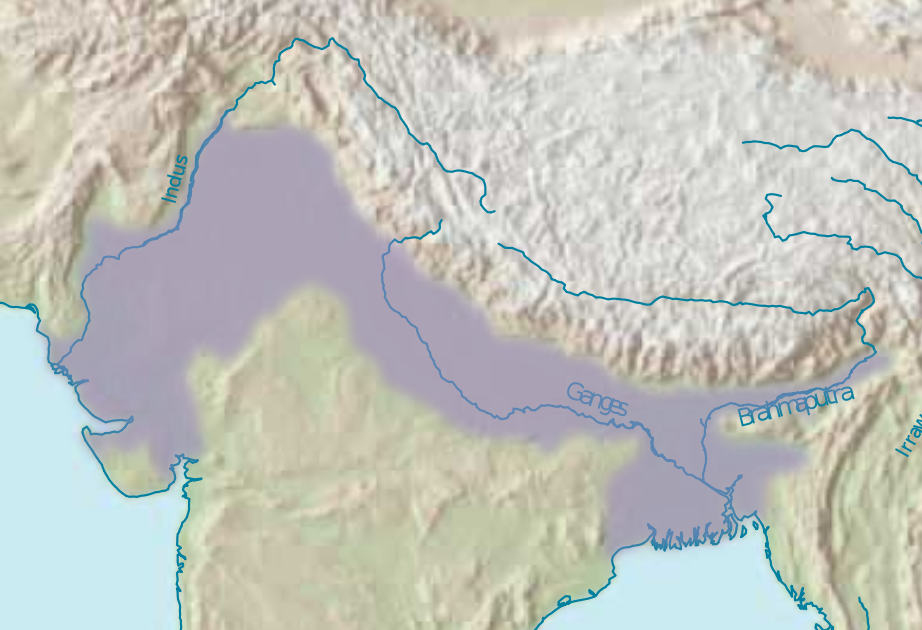
The northern highlands include the second highest mountain in the world, K2, and is comprised of several mountain chains (like the Hindu Kush - or "Hindu Killer" - and the Himalayas). The mountains provide the flow of waters that not only form the Indus River but also the many river systems of the Indo-Gangetic Plain (the etymology of "Indus" is derived from the Sanskrit word Sindu. Sindu, which means ocean, is also the root from which the modern words Hindu and India are derived).  The Indus River water flow is 80% to Pakistan and 20% to India settled by a 1960 treaty which India threatens at times to renegotiate.  The area around Baluchistan makes up over 40% of Pakistan, yet is underpopulated due to water scarcity and the mountainous areas along Afghanistan (an area also prone to earthquakes). This area is physically part of the Iranian plateau and on the Eurasian side of the fault line.

The 'CIA World Factbook' lists arable land, extensive natural gas reserves, limited petroleum, poor quality coal, iron ore, copper, salt, and limestone as some of Pakistan's natural resources. The river system of the Indus also provides Pakistan with hydro-power as a renewable energy source, and access to the ocean brings with it fishing resources. Pakistan's agriculture is diverse, producing cotton, wheat, rice, sugar-cane, maize, sorghum, millet, pulses, oil seeds, barley, fruits and vegetables. Although only 4% of Pakistan is forested, Pakistan has an array of mineral resources (collecting 52 in all) ranging from gypsum, limestone, chromites, iron ore, rock salt, silver, gold, precious stones, gems, marbles, tiles, copper, sulfur, fire clay and silica sand. Most of Pakistan's minerals are collected in Baluchistan while precious stones and gems are found in the north. Pakistan receives over $200 million annually from exports of gemstones alone.


Communal Loyalties: Ethnicity, Language, and Religion

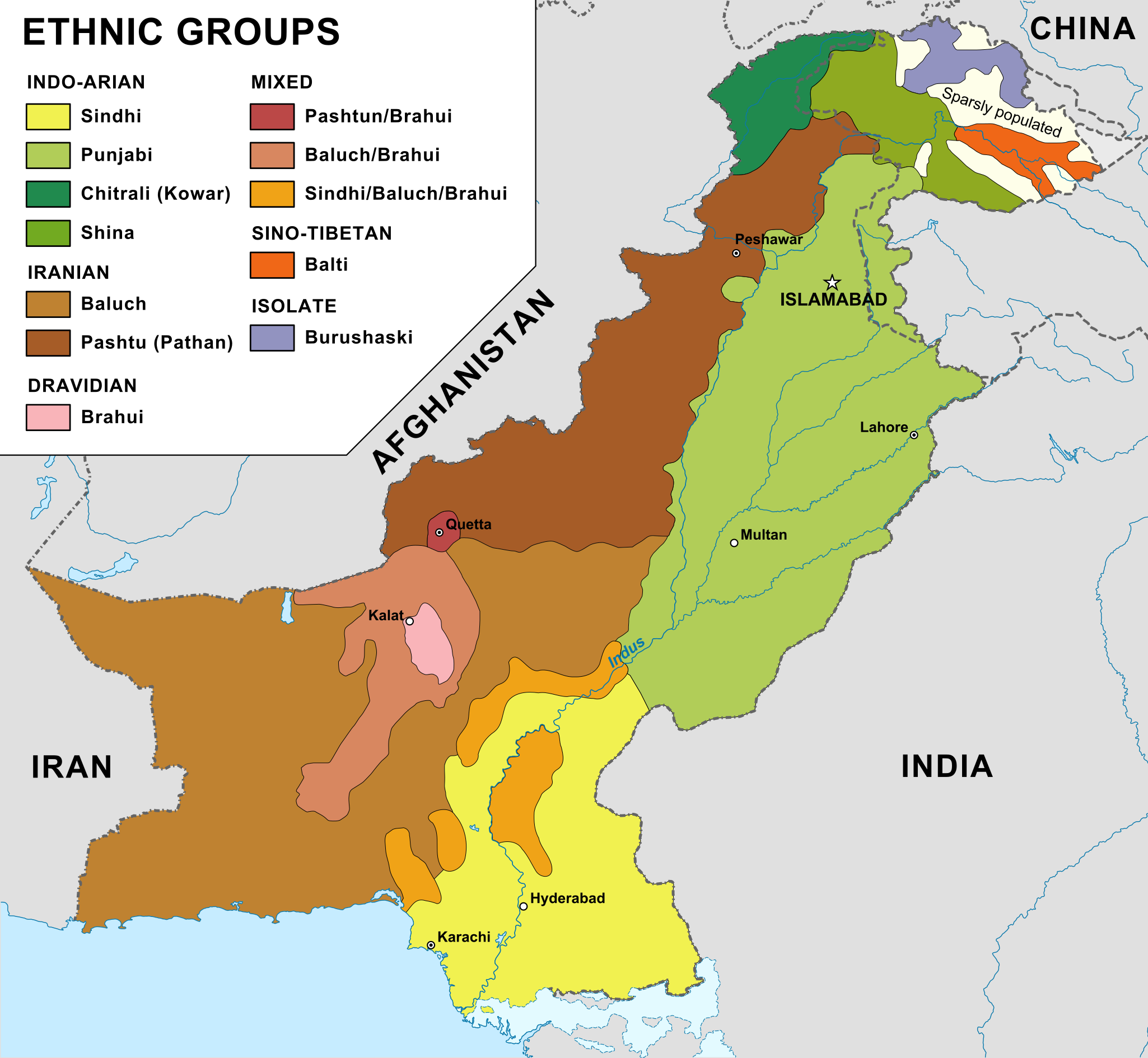
Ethnic groups of Pakistan (click to enlarge or here for full size.)
Not only does Pakistan act as the meeting place of the Indian and Eurasian plates, it also sits astride a pivotal civilizational fault line between the Islamic Middle East, Hindu India, and Confucian China.

Pakistan is inhabited by over 200 million people (making it the 6th most populous nation in the world) and is comprised of a diverse range of ethnic groups.

Ethnic (Pashtu and Baluch) Iranians and languages are most prevalent in western Pakistan and account for about 20% of the overall population. The Pashtuns are also in Afghanistan and were deliberately bifurcated by the 1893 Durand Line. The Pashtuns make up a good deal of the Taliban in both Pakistan and Afghanistan. When Pakistan was created at the time of partition, Afghan Pashtuns were opposed to the state and sought an independent Pashtunistan. Pakistan from its inception tried to establish among Pashtuns a "supra ethnic" Islamic identity which would ally this important tribe with their larger Islamic military project.

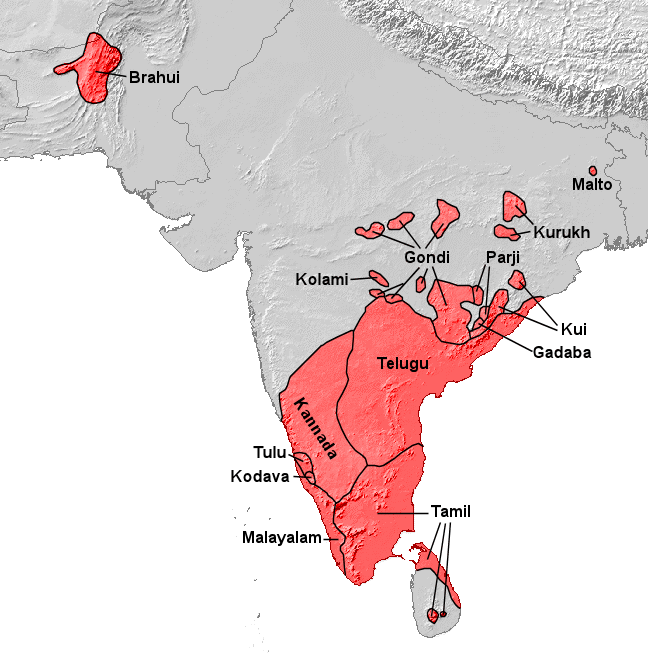
The eastern, Indus River half of Pakistan is dominated by Indo-Aryan peoples of the Indian Subcontinent and their languages. The two largest Indo-Aryan ethnic groups are the Sindhis in Pakistan's southeast and the Punjabis in eastern and northern Pakistan. While the Sindhis account for 14% of the population, Punjabis comprise 42% and stand as the largest, single ethnic group in the country (the region of the Punjab crosses national borders and extends into India). The Punjabis have controlled the military and intelligence services since its inception. The Punjabi sense of ethnic superiority and their alliance with Pashtuns in the salafist Sunni project provides  the key explanatory theme in the riddle of Pakistan. 40% of the population speaks Punjab but a different language(Urdu or English) is advocated for unity and official business. Today Bengali is the official language of Bangladesh and Urdu of Pakistan. English has a role in law and governance in both countries. The father of the Pakistan bomb A.G. Kahn has said even though he armed Pakistan, he has never really been considered a "son of the soil" and tongue because he is not a Punjab. President Musharraf (2001-2008) has said the same.Other ethnic groups in Pakistan include Sino-Tibetan peoples in the north and the Brahui-Dravidians in the southwest (Dravidian peoples are found primarily in southern India where Indian Christianity is most prominent).

Pakistan is second only to Indonesia as the world's most populous Muslim nation, with Sunni Islam making up somewhere around 85% of Pakistan's 200+ million population. Shiite Muslims are the next largest religious group in Pakistan (with 30-40  million Shiites, only Iran has a higher Shiite population), followed by Hindus (2%) and Christians (1.5%). The political founder and "Father of Pakistan" was Muhammad Ali Jinnah, a secularized Shiite from the Sindh area. While he was the primary organizer of an independent Pakistan, the country's military governing class was dominated by ethnic and religious loyalties he never shared.


Geopolitics: Political Geography and Foreign Policy

Pakistan borders the Arabian Sea to the south, Iran to the west, Afghanistan in the northwest, China in the northeast, and India to the east. Its capital of Islamabad lies in the north within the Punjabi lands of the Indus River plain. Gwadar on the Arabian Sea is being built up as a major port city with ties connecting Pakistan to China.

Pakistan is a very young nation. In 1947, the British partitioned Islamic Pakistan (then "West Pakistan") and Bangladesh (then "East Pakistan") from Hindu India. Kashmir and Jammu was a Muslim majority princely state with a Hindu prince who sided with India at the time of partition. There were a million deaths and 10 million refugees in the communal violence that accompanied the "sorting out".  Pakistan has been to war with India no less than three times since 1947 over Kashmir (located in the far north of both India and Pakistan). Today, control of Kashmir is divided between India, Pakistan, and China - bringing the three into constant low level conflict.  Pakistan's most costly war with India took place in 1971. The ethnic Bengalis of East Pakistan resented the governmental dominance by ethnic Punjabs of the West. Laws made “Urdu and only Urdu” the official language of the new Pakistani State in 1947 at the time of partition. In a December 1970 election the Bengali east, and two non-Punjab areas of Balochistan and the mostly Pashtun Northwest Provinces won enough seats to control the National Assembly. Yahya Khan, the military dictator who had allowed the elections announced in March 1971 the indefinite postponement of the National Assembly. A bloody attack on East Pakistan led to Bengali resistance and Indian intervention. East Pakistan declared itself as the new nation of Bangladesh in Dec 1971. The war would leave hundreds of thousands of Bengalis dead and 10 million more seeking refuge in India - but Pakistan lost a third of its army, half of its navy, and a quarter of its air force along with control over Bangladesh.
 In May 1998 both India and Pakistan successfully tested nuclear weapons. India had already tested in 1974. The story of "Islam’s first bomb”, the extensive stockpiles of Pakistan,  and the father of the nuclear program in Pakistan  have strangely never received the bad US press that surrounds the centrifuges of Iran.

Pakistan's relationship with Afghanistan was contested long before September 11, 2001. The line dividing the two nations - the so-called "Durand Line" named after the English Sir Mortimer Durand - was made between the British and the Afghans to demarcate Great Britain's sphere of influence into Afghanistan. The line cuts through the lands of ethnic Pashtuns who live on either side of the line. Afghanistan does not recognize the line, leaving both nations perpetually at odds. See, also, this previous AoA post on the region.

China and Iran both have working relations with Pakistan. Pakistan holds a much more favorable view of Iran than the Arab Sunni Gulf States do.  In 1999, both countries entered into a free trade agreement. The Chinese and Iranian relationships could be a source of stability which might allow a ruling group to move beyond the present salafist leanings of the military and intelligence agencies.

China sees in Pakistan an ally against India. China also believes good relations with Pakistan will cut them off as a base for Islamic rebellion in their own western province of Xinjiang. Half of Xinjiang's population are Muslim Uyghars.  During the Cold War, U.S.-Pakistan relations were particularly strong, with Pakistan playing a key role in aiding the U.S. against the Soviets in Afghanistan. Pakistan has put itself forward as a key U.S. ally in the fight against the Afghan Taliban. This is now highly contested.(see our four book review on Pakistan).  Since the bin Laden raid of 2011, the relationship between the U.S. and Pakistan has worsened. Pakistan looks to become a key partner not only with China, but with Russia as well. Meanwhile, China plans to invest $46 billion in a "New Silk Road" with Pakistan (compare that to the $31 billion in military aid  the US has given the Pakistanis in the years since 9/11).  Pakistan's Prime Minister, Nawaz Sharif,  has said: "Friendship with China is the cornerstone of Pakistan's foreign policy."

Located at a geostrategic position on the Arabian Sea and acting as the civilizational bridge between the Islamic middle east, Confucian China, and Hindu India, Pakistan will have a significant role to play in the future of southern Asia. At this time they are a nuclear armed Islamic state that has provided a strategic base for salafist Sunnis in Kashmir and Afghanistan, as well as an ongoing base for terrorist attacks against India: all of this while receiving significant funding as a major US ally.


November 2016 Update: Stratfor Video on the Geographic Challenges for Pakistan

Stratfor - short for Strategic Forecasting, Inc. - is a private global intelligence company that offers geopolitical insight into the interplay of nations. Stratfor has developed an excellent series of short (~2-4 minute) videos which provide the viewer with a specific nation, along with its basic history, geography, culture, and geopolitical allies and adversaries. In the following video, they present the geographic challenges facing Pakistan.


For more information on Pakistan, visit its page on the CIA World Factbook.

See also this excellent talk given on the topic of Pakistan's history tied to the U.S.

Friday, December 11, 2015

Friday BookReview: Pakistan - A Doubtful Friend in Asia


by Dr. David Pence


Pakistan: Between Mosque and Military
by Husain Haqqani (2005)

Magnificent Delusions: Pakistan, the United States, and an Epic History of Misunderstanding
by Husain Haqqani (2013)

The Shadow of the Great Game: The Untold Story of India's Partition
by Narendra Singh Sarila (2005)

The Wrong Enemy: America in Afghanistan, 2001-2014
by Carlotta Gall (2014)


Indonesia (205 million), Pakistan (200 million), India (180 million), and Bangladesh (150 million) have the largest Muslim populations in the world. None of them are in the Mideast and none of them are linguistically or ethnically Arabic. Just as Americans must examine our long-term ally Saudi Arabia in the Mideast to find the roots of the 9/11 attack, so we must understand our long-term ally Pakistan in South Asia to see the nature of our enemy there. The U.S. alliance with Pakistan had largely been formed in terms of Pakistan’s anti-Soviet role during the Cold War, and then as an ally in fighting the Taliban in neighboring Afghanistan after 9/11. We were not the first to think of Pakistan as an obvious cultural enemy of the godless Soviets, and thus a possible geostrategic ally. The Untold Story of India's Partition argues that "once the British realized that the Indian nationalists who would rule India after its independence would deny them military cooperation… they settled for those willing to do so by using religion for their purpose." While the founding father of Pakistan, Mohammad Ali Jinnah, was quite secular, the rationale for the state was "to protect Muslims." What belies this rationale is a simple geographic fact. The states where Muslims were in the majority and didn’t need special protection became Pakistan; while areas with substantial minority Muslim populations which would be more vulnerable were left under Hindu majority rule in the new India. In the 1947 partition, one million Hindus, Muslims, and Sikhs were killed; and fifteen million were displaced to the new states. Author Narendra Singh Sarila was aide-de-camp for Lord Mountbatten, viceroy of India, before independence and governor general until 1948. He was in the Indian Foreign Service from 1948-1985. He argues that the United States was more an advocate of Indian unity and independence than Indian public opinion has acknowledged. The U.S. under Roosevelt -- much more than Britain under Churchill -- believed the text of the Atlantic Charter (August 1941) "respecting the right of all peoples to choose the form of government under which they will live" actually applied to the nations of Asia as well as Europe. Roosevelt was vehemently opposed by Churchill who thought Americans did not understand the rule of coloreds. Churchill and others who opposed Indian independence favored partition as a fallback position and used "the protection of Muslims" as a rationale that would appeal to the gullible Americans. Mr. Sarila concedes that the US has continued the British policy of "using religion to achieve strategic objectives" in Pakistan, but along with many Indian geostrategic thinkers, he encourages a new hope in "the improvement of US-India relations" because  "Western policies of exploiting political Islam to pressurize India have run their course."

Husain Haqqani was Pakistan’s ambassador to the United States from 2008-2011. His book Pakistan: Between Mosque and Military is a devastating critique of the "state within a state" formed by Pakistan military and intelligence services. He argues convincingly (and dangerously for himself) that from the beginning the Islamist identity and foreign policy initiatives of Pakistan have been rooted in "institutions and the state." This is not an aberration of particular military heads of state. Since the beginning the "obsession with India" has driven all Pakistani military policy with its western neighbor in Afghanistan and its northeastern dispute with Kashmir.  His history is a clear narrative and yet full of nuances that only an insider can relate. Much of the purification ideology of Pakistan is a Salafist type of Sunni Islam associated with the Deobandi school. They have become a significant force in the nation’s educational system. Religious ideology could not hold together East and West Pakistan (separated by a thousand miles of India). The ethnic Bengalis of the East resented the governmental dominance by ethnic Punjabs and laws making “Urdu and only Urdu” the official language of the new Pakistani State. In a December 1970 election the Bengali East, and two non-Punjab areas of Balochistan and the mostly Pashtun Northwest Provinces, won enough seats to control the National Assembly. Yahya Khan, the military dictator who had allowed the elections, announced in March 1971 the indefinite postponement of the National Assembly. A bloody attack on East Pakistan led to Bengali resistance and Indian intervention. East Pakistan declared itself as the new nation of Bangladesh in December 1971.

The muted response of the United States to the Pakistani military rampage in the East was attributed to the role of the Pakistan military in arranging the secret Kissinger visit to China (summer 1971). That preceded the Nixon breakthrough in February 1972. All of this history, as well as the development of the "Islamic bomb" by A.Q. Kahn, is explained with even greater detail and clarity in Haqqani’s second book Magnificent Delusions. He wrote this book after serving as ambassador for the assassinated Benazir Bhutto. Haqqani had to leave Pakistan several months after the American raid in Abbottabad [about 70 miles north of Pakistani capital] which killed Osama bin Laden in May 2011. His second book is much more detailed about the nuclear physicist Kahn. (An excellent documentary on the development of the real Islamic nuclear weapons of mass destruction is here.)

Mrs. Bhutto was killed by a bomb in late 2007
There were three primary strategic goals of the Pakistani military and intelligence agencies. These were not always shared by the various civilian governments. They were: a) developing a nuclear arsenal; b) achieving "strategic depth" in Afghanistan which means having a salafist-type Sunni government in Afghanistan that would never consider an alliance with Hindu India or cultivate cross-border ethnic nationalisms of Pashtunistan and Balochistan; and c) cultivating an Islamic identity in Kashmir to break from Indian rule and realign with Pakistan. (Though Kashmir has an overwhelming Muslim population, the province stayed with India at the time of partition.) Long before the US supported muhajadeen in Afghanistan to fight the Soviet invasion of 1979, the Pakistan military was developing Taliban-like forces in Afghanistan to insure national development by their neighbor which would preclude an alliance with India. This is what they called "strategic depth" in Afghanistan. When the US attacked the Taliban after the 2001 World Trade Center bombings, only three countries had recognized the jihadist regime as a legitimate state: Saudi Arabia, Pakistan, and the United Arab Emirates. Ambassador Haqqani tells the story how occasional strikes against Al Qaeda operatives by the Pakistan government kept the US off balance in properly assessing the situation. Haqqani writes: "There was a huge gap in the Bush Administration’s knowledge about Pakistan. Condoleezza Rice was surprised when Russian President Vladimir Putin brought up the subject of Pakistan during his meeting with Bush at the G-8 Summit meeting in Genoa in July 2001. "He excoriated the Perez Musharraf regime for its support of extremists and for the connections of the Pakistani intelligence services and military to the Taliban and al Qaeda," she wrote in her memoir. Putin said that the extremists "were all being funded by Saudi Arabia" and that it would only be a matter of time until it resulted in a major catastrophe. "We of course knew the connection between Pakistan and the Taliban. But I was taken aback by Putin’s alarm and vehemence, and chalked it up to Russian bitterness toward Pakistan for supporting Afghan Mujahideen who had defeated the Soviets in the 1980’s. Pakistan’s relationship with the Taliban would become one of our gravest problems. Putin never let us forget it, bringing up the conversation time and time again."


Another voice describing Pakistan during these turbulent years is Carlotta Gall, the New York Times correspondent to Afghanistan and Pakistan from 2001-2013. Her father, British journalist Sandy Gall, covered Afghanistan during the Russian Afghan war and bequeathed his love and knowledge of the country to his daughter. Mrs. Gall now writes from North Africa and, like Mr. Haqqani, would not be safe in Pakistan. The Wrong Enemy: America in Afghanistan 2001-2014 is not a subtle title. Gall, however, is a very subdued and non-inflammatory writer. Yet her travels and countless interviews in Afghanistan (as well as many in Pakistan) leave her with a powerful and devastating conclusion. The epicenter of Islamic jihadism that expresses itself in the Taliban of Afghanistan is amidst the madrasses, intelligence services, and military of Pakistan. She concludes the book, "Until the Pakistan military ceases to use the Taliban as an instrument of its strategic aims, Afghanistan’s long war will continue." Just before that, she made one of her few policy recommendations: "The US should also force Gulf countries to curtail their funding of extremist groups and madrassas in Pakistan." The reference to Gulf countries means the UAE and (as Vladimir Putin pointed out 15 years ago) Saudi Arabia. Many of the reviews of her book have focused on her accusation that knowledge of Osama bin Laden hiding in Pakistan reached to the highest levels in the intelligence and military. Her critics ask for proof and more proof. (She demurs, telling her safely ensconced critics that her sources would be killed if she gives more details). It is mindful of a previous era of a crippling skepticism. When the US intelligence began late in the Bush presidency (2006-08) to focus on ties of the Taliban and Pakistan government, a diplomat said their findings were continually nitpicked by government officials "acting like stamp collectors."

Especially in the Pakistan city of Quetta, the ISI ties to Taliban were clear. One distinction was that the Taliban had Pakistani-Afghan roots, while Al Qaeda was more Yemeni-Saudi based. Half of the first 400 Al Qaeda members which the Pakistan government claimed to capture were Saudi or Yemeni. The Taliban movement was largely Pashtun, the large ethnic tribe that had been split in two by the Durand line drawn in 1893 by Mortimer Durand, the British Indian Foreign Secretary. The British strategy had been to establish an Afghanistan/Indian border which would break apart natural tribal loyalties that could become the basis of military resistance. There was no Pakistan at that time; but when Pakistan was established in 1947, they used the 1400-mile Durand Line as their western border. Pashtuns of Afghanistan proposed instead a Pashtunistan to reunite their ethnic and religious brothers. The Pakistan military has offered a strict super-ethnic purifying Islamic identity as a way to cement these cross-border loyalties in service of their larger military project aimed against India.

The progressive cultural radicalization of Pakistan society had eerie similarities with Saudi Arabia. Gall's reporting on the “Red Mosque” incident brings to mind the Saudi story. Just as the 1979 Siege in Mecca against the Saudi government was militarily suppressed, but then led to many concessions to Wahhabi Sunnis, the “Red Mosque” rebellion in Islamabad in 2007 ended with a similar government repression followed by ever deeper concessions to cultural salafists. (Salafist means 'ancestor' and refers to various Sunni purification movements like Wahhabi Islam in Saudi Arabia and the Deobandi school in Pakistan. ISIS, Al Qaeda, Al Shabaab in Somalia, and Boko Haram in Nigeria are all Salafist movements).

Again, in her low-keyed way, the author stresses that while there are many American projects for increased government services to win loyalties and increase democracy, she quotes tribal leaders who insist that providing stable long-term security is always the first and most fundamental requirement in securing political loyalty. Similar reasoning led to Afghan President Harmai Karzai proposals to call a "loya jirga" (a traditional tribal assembly) to develop a broadly representative societal agreement to protect. The Communists had always opposed this as unscientific tribalism, the mullahs were against it for substituting ethnic loyalties for religious purity, and the Americans were dismissive of any schemes of rule not based on 'one person, one vote.'

Hasain Haqqani, in explaining the Islamic transformation of the Pakistani educational system, said instead of studying geography, history, and civics, students studied a kind of "political science based on Islam." There is an eerily similar project in the erasure of American history, geography, and civics which have made us blind and deaf to the religious movements and national states who have declared us their enemy. The authors of the books reviewed here are teaching a clarifying mixture of history, biography, and geography. Remarkably, their stories comport well with the analysis of Bruce Riedel who chaired President Obama’s reappraisal of American strategy in Afghanistan and Pakistan. Unlike the reluctance of major policy makers to name and face our foes in Saudi Arabia, it seems the secret about Pakistan is out of the bag. Maybe it was the Bin Laden compound in Abbottabad. President Obama sometimes speaks of 'AfPak' -- showing the two countries must be treated together in determining strategy. President Obama’s “tilt toward Asia” has improved our relations with India enough that we can now deepen our alliance with them against the Pakistani support of terror mostly directed against them. When we see Pakistan in terms of India, China, and South Asia we will clarify the real nature of our enemy in this theatre and begin to cultivate our necessary allies. Aesop said "a doubtful friend is worse than a certain enemy." There is a good reason that Haqqani’s book on the US-Pakistani "alliance" began with that reminder from the ancient sage.

This mosque in Lahore opened in 1673, and for centuries was the world's largest.

For more information on Pakistan, see our Map on Monday: PAKISTAN

Saturday, July 28, 2018

Religion and Geopolitics Review: Saturday July 28

By Dr. David Pence and A. Joseph Lynch 


WEEKLY BRIEF

PAKISTAN ELECTION - A NEW NATIONALIST 
Pakistan has elected a national sports hero on an anti corruption platform upsetting the two major parties which have ruled Pakistan for years. 65 yo Imran Khan is a Pashtun (born in Lahore, Punjab) but he did well in the dominant Punjab ethnic areas as well.  In Pakistan the security establishment and the military are significant institutional and national players and the military sided with the newcomer. Pakistan is the 7th largest nuclear power in the world, the fifth most populous (212 million), and the third largest Muslim country. In 1947, India and Pakistan were granted Independence from Britain and underwent  a bloody interchanging migration scheme called the Great Partition. We have described Pakistan as radical jihadist Sunni power who have actually been our foes during the now 16 year old war in Afghanistan. They were our indispensable ally in the Cold War and certainly played a more pivotal role than France or Great Britain in winning that struggle against the atheist materialists who ran the Soviet State. But in the post 911 war on terror, Pakistan security services sided with their Pashtun ethnic kinsmen who dominated the Taliban. (The 1890 Durand Line marking the Afghan/Pakistan border was a deliberate British line of bisection through the major ethnic group of the region.) Osama bin Laden benefited from Pakistan hospitality after his Afghan base was destroyed in 2001.
Pakistan does not share the radical antipathy of their Saudi Arabian allies against all Shiites. They have not participated in the murderous attack on Yemen, the hostilities toward Iran, nor the isolation of Qatar advocated by Saudi Arabia's Salman family. 15% of Pakistan is Shiite. Pakistan's greatest ally is China who is helping build major infrastructure projects. Their greatest foe is India. Their most significant problem is corruption. President Khan could be the new leader needed to help assemble the near neighbors (Pakistan and Iran)  and the far neighbors (Russia, China and India) needed to end the war in Afghanistan. He will advocate a strongly religious and nationalist course but may still prove an essential nuclear armed Sunni alternative to the toxic salafists of Saudi Arabia. 


I. POPE FRANCIS & THE CATHOLIC CHURCH

POPE FRANCIS' C9 COUNCIL OF CARDINALS IS IN NEED OF REFORM AS WELL: The Pope established this council when he first took office to have a collaborative council to help him take on the daunting Curia. The coordinator of the council is Cardinal Maradiaga, the Archbishop of Tegucigalpa, Honduras. His trusted Honduran auxiliary bishop(Juan Fasquelle) has just resigned for longstanding homosexual abuse. He had been vigorously defended by Maradiaga. Only a formal request by the Pope for an apostolic visit in 2017 uncovered the financial and homosexual works of Fasquelle.  How long will he remain on the pope's junta?

FROM SPELLMAN TO MCCARRICK - THE LAVENDER CHAINBy Randy Engel

McCARRICK RESIGNS FROM COLLEGE OF  CARDINALS
What is so encouraging(to give courage) about the McCarrick case is that real punishments and consequences are  being delivered.  This is in stark contrast to the continuing shame that Rembert Weakland is still in the College of Cardinals.


AOA ON CLEANING THE SCANDAL: Our outline of essays on Masculine Anthropology and Reform of the Catholic Priesthood

THERE IS NOTHING GAY ABOUT CHICKEN HAWKSA very good review asking about bishops' complicity in the McCarrick abuse - well known and well covered.  A penetrating expose of three cardinal-bishops Wuerl, O'Malley, and Farrell. 


II. ISLAM AND THE MIDDLE EAST

ISRAEL PASSES NATION STATE LAW: A nation for the Jewish people with the right of return for all Jews. Hebrew is the official language. Jewish settlement communities are to be encouraged as benefits to the nation. Jerusalem is the capital...and more .  This is an honest attempt to insert a corporate identity that must be protected in laws and customs. Israel is not just a "democracy of individuals".  There is a great debate pitting nationalism vs. hyper individualism of globalism. The Israeli Parliament just voted with the nationalists.

IRAN NEW GENERATION OF HARDLINERS: Ruhollah Faghihi writes: "On foreign policy, the new generation strongly opposes any sort of relationship with the West, rather emphasizing strong ties with the East, including Russia. In addition to slamming Rouhani for the nuclear deal with the West, they blame the hard-liner old guard for coming to the terms with the JCPOA. In line with their effort advocating relationships with the East, young hard-liners on social networks and on shows on state TV have been ardently portraying Russia and its president, Vladimir Putin, as new members of the axis of resistance and as being influenced by Iran's revolutionary policies. In the coming years, the role of the innovative revolutionaries is likely to increase, presenting the new face of the hard-liners as Russophiles who are softer on cultural matters but more strident in political affairs and generally uncompromising."

TUCKER CARLSON ON TRUMP STAFF AND THEIR DESIRE FOR WAR WITH IRAN:
The never Trumpers can't explain his nationalist strategy but they can play on his antipathy to Iran 
Tucker Carlson is distinguishing himself as the most penetrating journalist on TV.


III. LATIN AMERICA

MEXICO'S ATYPICAL LEFTIST -  PRESIDENT IS A NATIONALIST AND ANTI-CORRUPTION: Newly elected Lopez Obrador promises a tightening of Mexico's southern border to keep out illegal influx of Northern Triangle (Guatemala, Honduras El Salvador) refugees. Profile of Andres Manuel Lopez Obrador (AMLO) - an atypical leftist.

POLITICS IS ABOUT "THE WELL BEING OF THE SOUL" - IS THE MEXICAN LEFT TURNING TO LOVE? Obrador describes himself in the broad sense as a Christian and received the endorsement of the evangelical party (Social Encounter Party). A telling article of how he campaigned.

It was Obrador opponents in the PRI who pushed gay marriage. He called them the Mafia elite.
Obrador named his party MORENA an acronym for Our Lady of Guadalupe as well. He announced his candidacy on December 12.  His hero is Lazaro Cardenas the leftist nationalist president (1934-40) who brought Mexican oil under nationalist control. Gay rights activists push the memory of President Calles - the viciously anti-Catholic leader who caused the Cristeros war. Cardenas was not a practicing Catholic but his right hand man and successor Manuel Camacho was.  Cardenas did not continue the hostile policies of the Calles era toward religion in general and the Catholic Church in particular. AMLO is no Plutarch Calles. He has requested the "accompaniment" of Pope Francis in his quest for Mexico's "moral regeneration".

Three quotes from AMLO: "It is indispensable that we start a new current of thought based on a moral paradigm, love for one's family, neighbor, nature and nation." "The highest goal of politics is to achieve love" "Some have said , 'Christ is love'."

NICARAGUA - THE LEFTIST TURNED DICTATOR HOLDS ON WITH INCREASING VIOLENCE: From Ishaan Tharoor of Washington Post:

“July 19 happens to mark the 39th anniversary of the victory of the Sandinistas, the left-wing revolutionary movement that overthrew the brutal, U.S.-backed dictatorship of Anastasio Somoza. Now Ortega, a 72-year-old former Marxist guerrilla, increasingly resembles the tyrant he and his comrades once toppled. Masaya was once a Sandinista hotbed; now it's seen as a bastion of opposition.

“After returning to power in 2007, [Ortega] sidestepped the constitution to get himself reelected in 2011. He then completed his palace coup by assuming full control of all four branches of government, state institutions, the military, and police,” explained journalist Tim Rogers, a veteran Nicaragua hand. “He banned opposition parties, rewrote the constitution, and turned Nicaragua into his personal fiefdom, which he rules from inside the walls of his stolen compound, a concrete fortress he rarely leaves.”

Having long shed any pretense of Marxism-Leninism, Ortega maintained power by cultivating support among the clergy and the country's business community. Until recently, he also could count on the largesse of Venezuela. “But then Venezuela cut its aid, and the government’s fiscal problems were exacerbated by corruption,” noted the Economist.

Now Nicaragua faces its own Venezuelan moment, with a regime violently clinging to power in the face of vehement popular unrest. “The demands of the people are clear: justice for those who have been killed, a return to democracy and the resignation of the ruling family,” Dánae Vílchez, a Managua-based journalist, wrote for The Post's opinion section last month.

The duo, critics warn, is following the same tactics as leaders in Caracas. “Like Hugo Chávez, Ortega sought to remain in power indefinitely, but lately planned to hand the reins to his wife,” wrote Otto Reich, a former U.S. diplomat in Latin America.


IV. AROUND THE WORLD - NATIONS R&G ROUND UP

COMPARATIVE POPULATIONS 2017: MEXICO - 125 million, NICARAGUA - 6 million, IRAN - 82 million, CHINA - 1.4 billion, NIGERIA - 190 million, North Korea - 25 million, South Korea - 50 million.

CHINA TRADESome sobering insights from David Goldman (aka Spengler) - an insightful at times idiosyncratic thinker on international relations.

EUROPEAN UNION AND US MAKE NEW TRADE AGREEMENTS
The lack of reporting about this after the hyperbolic message that Trump had left our allies in Europe to become a Russian puppet would be stunning if we expected journalism from journalists. We are now seeing true American negotiations in the world of trade that will be combinations of tariffs and even subsidies if our productive capacities are challenged--This is the kind of national mercantilism that built the American economy.  One approach in farm production as battle lines sort out is to recall an old idea of Hubert Humphrey's:  build up a "seven year granary" as part of our national security strategy. Food, water, infrastructure, defense--all need to be tended.

KOREA - THE ROLE OF CHRISTIANITY IN RECONCILIATIONSyngman Rhee-ex marine pastor explains.

RUSSIA IS NOT THE SOVIET UNIONA comparative history lesson from Pat Buchanan. A Christian Conservative, biographer of Solzhenitsyn, Joseph Pearce looks at Russia anew 100 years after the czar and his family were murdered. He suggests, "Give Peace a Chance."

NIGERIAIs it the spread of the Sahara, the animosity of herdsmen for farmer or the spreading animosity of Sunni Jihadists who are killing Christian farmers?


V. AMERICAN FOREIGN POLICY AND PRESIDENTIAL POLITICS

GEOPOLITICAL THINKERS. KISSINGER ON THE DEATH OF BRZEZINSKI. JFK ON NIXON: Which diplomatic brain would he compare in today’s US establishment to himself, say, or the late Zbigniew Brzezinski — his former sparring partner, who also served as national security adviser? The mention of Brzezinski triggers something. “When Zbig died, which was a great surprise, I wrote to his wife that no death has moved me quite as much as his,” Kissinger says, again with evident feeling. “Zbig was almost unique in my generation. We both considered ideas about the world order to be the key problem of our time. How could we create it? We had somewhat different ideas. But for both of us, we were above all concerned to raise diplomacy to that level of influence.” Who is asking those questions today, I ask. “There is no debate today,” Kissinger replies. “It is something we need to have.”

Kissinger's words are a reminder of the relationship of Richard Nixon and John Kennedy. They both entered Congress in the same year after fighting in World War Two. They respected each other as the two best geopolitical minds of their generation. JFK implied if he lost the Democratic nomination in 1960 to Adlai Stevenson he would privately vote for Nixon.

THE DC CHURCH WHERE BRETT KAVANAUGH WORSHIPSBlessed Sacrament profile from Get Religion.

OBAMA IN SOUTH AFRICA: Selections from President Obama's Nelson Mandela lecture in South Africa, July 2018:                           
French World Cup –they don’t look like Gauls

And, if you doubt that, just ask the French football team that just won the World Cup. Because not all of those folks look like Gauls to me. But they’re French. They’re French.

Common humanity doesn’t preclude tribe, race or country

Embracing our common humanity does not mean that we have to abandon our unique ethnic and national and religious identities. Madiba never stopped being proud of his tribal heritage. He didn’t stop being proud of being a black man and being a South African.

Legitimate Claims of common language, citizenship, and borders

In the West’s current debate around immigration, for example, it’s not wrong to insist that national borders matter; whether you’re a citizen or not is going to matter to a government; that laws need to be followed; that, in the public realm, newcomers should make an effort to adapt to the language and customs of their new home. Those are legitimate things, and we have to be able to engage people who do feel as if things are not orderly.

A Shout out to Objective Reality

I should add: for this to work, we have to actually believe in an objective reality. This is another one of these things that I didn’t have to lecture about. You have to believe in facts. Without facts, there is no basis for coöperation. If I say this is a podium and you say this is an elephant, it’s going to be hard for us to coöperate.

Inspiration not leaders

And that’s what we need right now. We don’t just need one leader; we don’t just need one inspiration. What we badly need right now is that collective spirit. And I know that those young people, those hope carriers, are gathering around the world.

Feminism and Gay Rights are not Western Ideas but Universal Imperatives

We have to resist the notion that basic human rights like freedom to dissent, or the right of women to fully participate in the society, or the right of minorities to equal treatment, or the rights of people not to be beat up and jailed because of their sexual orientation—we have to be careful not to say that somehow, well, that doesn’t apply to us, that those are Western ideas rather than universal imperatives.

Greed and the desire to dominate have lasting holds especially on men.

We have a better story to tell. But to say that our vision for the future is better is not to say that it will inevitably win. Because history also shows the power of fear. History shows the lasting hold of greed and the desire to dominate others in the minds of men. Especially men. History shows how easily people can be convinced to turn on those who look different, or worship God in a different way.

On the International Elite

In every country, just about, the disproportionate economic clout of those at the top has provided these individuals with wildly disproportionate influence on their countries’ political life and on its media; on what policies are pursued and whose interests end up being ignored. Now, it should be noted that this new international élite, the professional class that supports them, differs in important respects from the ruling aristocracies of old. It includes many who are self-made. It includes champions of meritocracy. And, although still mostly white and male, as a group they reflect a diversity of nationalities and ethnicities that would have not existed a hundred years ago. A decent percentage consider themselves liberal in their politics, modern and cosmopolitan in their outlook. Unburdened by parochialism, or nationalism, or overt racial prejudice or strong religious sentiment, they are equally comfortable in New York or London or Shanghai or Nairobi or Buenos Aires or Johannesburg. Many are sincere and effective in their philanthropy. Some of them count Nelson Mandela among their heroes. Some even supported Barack Obama for the Presidency of the United States, and by virtue of my status as a former head of state, some of them consider me as an honorary member of the club. And I get invited to these fancy things, you know? They’ll fly me out.
But what’s nevertheless true is that, in their business dealings, many titans of industry and finance are increasingly detached from any single locale or nation-state, and they live lives more and more insulated from the struggles of ordinary people in their countries of origin. Their decisions to shut down a manufacturing plant, or to try to minimize their tax bill by shifting profits to a tax haven with the help of high-priced accountants or lawyers, or their decision to take advantage of lower-cost immigrant labor, or their decision to pay a bribe, are often done without malice; it’s just a rational response, they consider, to the demands of their balance sheets and their shareholders and competitive pressures.

THE FOLLOWING DAY  IN A TOWN MEETING IN JOHANNESBURG, SOUTH AFRICA.
"Men have been getting on my nerves lately. Whats wrong with you, brothers?" ( He then corrected himself.. ) "Whats wrong with us?  We're violent, we're bullying.  I think the continent would be better off if more women got empowered."
President Obama is truly his mother's son--a white feminist atheist anthropologist. Men "get on his nerves."

Monday, July 30, 2012

MondayMap: Geographic and Historical markers for India, Pakistan, Afghanistan, and Bangladesh

Doc Pence writes:

                          
The Mughal Empire consolidated Muslim rule in the Indian subcontinent [see this map]. The oldest parts of the empire were the backbone of West and East Pakistan, which were the Muslim sections partitioned from the British Raj (Hindu for "Rule") granting India national independence in 1947.  The Mughals carried the Genghis Khan legacy and Persian culture, as well as Islam.

The Taj Mahal (Urdu for “crown of palaces”) was built from 1632-53 by a Mughar sultan and dedicated to his wife. 

                    
One of the greatest heroes of Hindu nationalism broke the Mughal rule and laid the foundation for the Maratha empire.  C. Shivaji Maharaj (1630-80) had a spiritual devotion to India taught to him by his religious mother. From a young age he developed a walking knowledge of his land, and by his twenties had a loyal band of officers (including Muslims) who would help perfect his commando/guerilla approach to war.


Shivaji and his mother – she taught him to love India by loving the great epics, Ramayana and Mahabharta.  
[Map of Maratha realm here].

The British Rule (Raj) lasted until 1947 when India and Pakistan were granted independence. East and West Pakistan were under one rule as the Muslim state. In March 1971, the Bangladesh liberation war was begun, ending with intervention by India and the defeat of Pakistan in December of that year. Though both Muslims, the Bengali-speaking coastal people separated themselves from the landlocked Urdu-speaking westerners.


The western border of Pakistan separates it from another Muslim country, Afghanistan. The “red line” drawn to separate them is called the Durand line (after the British foreign secretary Henry Durand who drew it in 1893). Afghan president Hamid Karzai (2004- ) called it "a line of hatred that raised a wall between the two brothers."

One important ethnic group separated by the porous barrier is the Pashtun. Most Taliban members are of the Pashtun tribes.

At the northwest border of India and eastern Pakistan [see this map] is another important tribe cut by national borders -- the Punjabi.  (Comprising 40 percent of Pakistan's population, their language ranks as the most widely spoken in that nation).

The Punjabi tribal loyalties formed the soil of one of the most interesting religions of the world: the Sikhs.  Formed in the 15th century at a bloody border with incoming Islam, the Sikhs are monotheistic, educated, elegant and accomplished soldiers.  Most men have Singh (‘lion’) as part of their names, and are required to be armed as a tribute to liberty. Most women take as part of their names Kaur (meaning ‘princess’).

One of the recent leaders of the Sikhs made this comment:

"A human is a blend of saint and soldier; this is a complete person. If you are not a soldier your sainthood will be kicked around. If you are only a soldier and not a saint, you will start kicking others around."


The present prime minister of India is a Sikh: Dr. Manmohan Singh. He is the first non-Hindu prime minister and an accomplished economist. He won reelection for a second five-year term in 2009.

There are 30 million Sikhs worldwide (which is more than the combined number of Jews and Mormons).  Most of them live in the Punjab region of India.

__________


I. Physical Geography (including a purely biological assessment of human demographics, and food and shelter strategies)
II. Religious loyalties (including intersections of ethnic and language groups)
III. Military history (including present and past allies and enemies)

These are the three categories that our AOA blog tries to employ in laying out a realistic depiction of the historical landscape in which the Church and nation act in the Divine drama. Part of the miniaturization of life (and infantilization of American males) in the last 50 years has replaced adult statesmen – and their concerns of basic geographic literacy and a working knowledge of the nations – with the narcissism and identity-preening of adolescent males and careerist feminists.     

Monday, October 19, 2015

Map on Monday: BANGLADESH

The Physical Ecology, Communal Loyalties, and Geopolitics of Bangladesh

by A. Joseph Lynch

Physical Ecology: Natural Resources and Physical Geography

Bangladesh is a small, Asian nation about the size of Iowa. Located along the Tropic of Cancer on the Bay of Bengal, Bangladesh is subject to a humid, wet, monsoon climate. Furthermore, around 75% of Bangladesh is less than 10 yards above sea level. This, combined with the great Ganges, Brahmaputra, and Meghna Rivers, makes Bangladesh both fertile but also susceptible to flooding.

Nearly 20% of the nation is flooded each year, destroying seven million homes and killing around 5,000 people. In heavy flooding years, the vast majority of the nation is flooded, tens of thousands are killed or displaced, and millions of dollars of agriculture are lost. Over a half million Bengalis perished in 1970 due precisely to this.

Bangladesh is rich in arable land, timber, and coal. While Bangladesh imports crude oil and petroleum products, it is Asia's seventh largest producer of natural gas. Agriculture plays a key role in the nation's economy, with tea, rice, sugarcane, cotton, and jute (used in ropes and textiles) being important cash crops. Access to the sea has also made the nation the world's fifth largest producer of fish. The textile industry of Bangladesh is ranked as the second-largest across the globe.


Communal Loyalties: Ethnicity, Language, and Religion

In 1951, the population of Bangladesh was around 44 million. That population has grown to over 160 million today, making Bangladesh the world's eighth most-populous nation - and its small (Iowa) size means Bangladesh is the most densely-populated nation in the world (excluding micro-states). Around 18.5 million live in either the capital city of Dhaka (12 million) or the port city of Chittagong (the largest seaport in the eastern Bay of Bengal).

Some 98% of the population is ethnically Bengali and speak Bengali as their primary language. Bangladesh is also a majority-Muslim nation with Sunni Islam comprising nearly 90% of the nation populace. A small Shiite-Muslim minority lives mostly in urban areas of Bangladesh. Around 9% of the population is Hindu while Buddhists and Christians each holding less than 1%.


Geopolitics: Political Geography and Foreign Policy

A brief sketch of Bangladesh's history is important for understanding its geopolitics. Although Hinduism has a long history in the country, Islam - the dominant religion of the nation - came to Bangladesh in 1204 (the same year the 4th Crusade sacked Constantinople). By 1500, Muslims had forged a large Bengal Sultanate with political links to Ming China, Indonesia, and the Ottoman Empire. In 1517 (the same year Martin Luther posted his 95 Theses), Portuguese traders began coming to Bengal and soon building factories. Following the Battle of Plassey in 1757, the area came under the control of British East India Company. British power in the wider area soon encompassed what is today India, Pakistan, and Bangladesh. Although victorious in World War II, the bankrupted British began withdrawing from the region.

In 1947, India became a separate nation from a new Islamic-based nation that included both Pakistan (formerly "West Pakistan") and Bangladesh (formerly "East Pakistan"). Language and ethnicity, combined with distance, drove division between the two halves of the nation. Although the Bengalis outnumbered the Pakistanis, West Pakistan controlled the military and higher government offices. Urdu (the official language of Pakistan) became the sole official language and the Bengali language left unrecognized. This rejection led to the Bengali Language Movement and increasing tension between east and west through the 50s and 60s. In 1970 - the same year thousands died in a massive cyclone to little government response - the Bengalis concentrated their population against the Pakistanis in national elections, winning a majority in the National Assembly. The new government, however, was not allowed to sit and its leaders forced to flee into India. This was the beginning of the Bangladeshi Liberation War.

India's support for a free Bangladesh brought it to war with Pakistan and made it a regional partner to the fledgling new nation. The war also witnessed the 1971 Bangladeshi genocide in which Pakistani militias killed between 300,000 and 3 million Bengalis. India and Bangladesh, however, proved victorious, and the Pakistanis surrendered at Dhaka on December 16, 1971. In the period thereafter, Bangladesh remained non-aligned in its foreign policy. It has, however, specifically sought to build fraternity with other Muslim nations. In 1997, Bangladesh co-founded the "Developing Eight" along with Islamic Egypt, Indonesia, Iran, Malaysia, Pakistan, Turkey, and (about 50% Muslim) Nigeria. Today Bangladesh still holds good relations with India and Great Britain, but has sought investment from Japan and China while purchasing Russian and Chinese military equipment. As a Muslim nation in east Asia, the United States has forged a strong relationship with Bangladesh in terms of anti-terror operations (in 1991, Bangladesh also gave 2.300 troops for the liberation of Kuwait from Saddam Hussein).


Some Additional Resources

For more information on Bangladesh, visit its page on the CIA World Factbook.

The video series, Geography Now!, offers additional information on Bangladesh through a short video.

Saturday, November 14, 2015

Religion and Geopolitics Review: Saturday, November 14

by David Pence and A. Joseph Lynch


I. ISLAM AND THE MIDDLE EAST

SAUDIS AND TERRORISM: The Saudis and 911. Lots of fingerprints remain. The Saudis' war against the Shia according to British Security head Sir John Dearlove. "Thank God for the Saudis" according to John McCain. The Saudis and Israel in an anti-Iran coalition - an odd couple no more.

PAKISTAN AND TERRORISM: Fareed Zakaria writes how Pakistan is the real base for the Taliban in Afghanistan. What Pakistan knew about bin Laden by Carlotta Gall, NY TIMES reporter/author of The Wrong Enemy. Her book (to be reviewed by AOA soon) depicts Pakistan, not Afghanistan, as the root of terrorism in South Asia.

Hamid Karzai, president of Afghanistan from 2006-2014 used his farewell speech to blast US/Pakistan inaction in addressing the real source of Taliban violence in Afghanistan - the Pakistan policy of intelligence agencies and the military supporting Salafist Sunnis as part of their anti-India foreign policy. The new president, Ashraf Ghani (elected 2014), promised to take a softer line against his neighbors in Pakistan. Now he sounds like his predecessor Karzai.

REALIGNING THE MIDEAST: Qatar and Iran. From our Gulf States Map on Monday. "Most Qataris follow a Wahhabi interpretation of Islam but they have had differences with the monarchs of Saudi Arabia, especially in favoring the more populist Muslim Brotherhood in Egypt. The US CENTCOM regional headquarters are in Qatar at the Al Udeid Air Base. Qatar's government funds the most influential venture in Arab television - Al Jazeera Network."


CHRISTIAN REFUGEES - WHY SO FEW?: Our State Department has not yet addressed the situation in which Christians avoid the UN refugee camps for fear of continued persecution by fellow refugees. None dare mention the religious nature of this problem. though many recall the Christians Overboard tale of refugees crossing the Mediterranean in April 2015.


II. NATIONS ROUNDUP

CANADA AND HER SIKHS: At the interaction of Islam and Hinduism arose the Sikhs. They are 4% of Canada's population but a much higher percentage of the diverse cabinet of newly elected Prime Minister Trudeau. The new defense minister got there the old-fashioned way - he fought.

BURMA (MYANMAR): Myanmar held elections on Nov 8, 2015, with the NLD party of Aung San Suu Kyi an overwhelming victor in the first open election in three decades. A short history for background explaining the role of her father in Burma's independence. She is barred from the Presidency because of a clause that says anyone with foreign children may not be president. That law was made with her in mind under the previous regime. She promises to rule from another perch than the presidency. Burma has 52 million people, 80% Buddhist, 7% Christian with ethnic dominance by Bamar 70% and Shan 10%. See Map on Monday (Southeast Asia).


III. RELIGION AND GEOPOLITICS ROUNDUP

WILL CHURCH FATHERS PUNISH THE GOMORRAH LOBBY: A new translation of Peter Damien's letter to the Pope on clerical depravity.

JEWS AND KEEPING SACRED SPACE: THE SEXUAL TABOO: The Rabbinical Council of Orthodox Jews has definitely stated there will be no female rabbis. A Yeshivat advocating female rabbis will keep graduating them to "change the facts on the ground."

NON-VIOLENCE AS RELIGION - THE DEATH OF RENE GIRARD: Rod Dreher at 'American Conservative' has a very good summary of the deceased philosopher's defining thesis concerning: 1) mimesis (the relation of the human drive to imitate and what we desire) and 2) sacral violence and scapegoating. Girard was controversial among secular academics because he claimed that Christianity was a "revealed religion" in exposing this fundamental human fault which leads to war and violence. He returned to the Catholic Church with his family, which is wonderful. His religious blindness, however, has misled many Catholic intellectuals who likewise are embarrassed by traditional notions of Satan and the Fall. Whenever I hear theologians talking about "non-violence as a biblical principle," I look for an inadequate description of Lucifer and an over-attachment to Girard as an "intellectual." Such theologians seeking intellectual credibility demonstrate their own misguided mimesis of a high status "great man." Sadly, the theologian mimics the anthropologist instead of correcting him. Rene Girard (1923 - 2015) R.I.P.

THE PRESIDENTIAL RACE: Trump and middle-aged white guys with rising death rate.

Saturday, August 26, 2017

Religion & Geopolitics Review: Saturday, August 26

by Dr. David Pence and A. Joseph Lynch

THE WEEKLY BRIEF
                 A STRATEGY FOR AFGHANISTAN AND AMERICAN NATIONALISM  President Trump's speech on Afghanistan signalled  a significant change in strategy. His emphasis on an alliance with India and a targeting of Pakistan's bad behavior is a long overdue correction of one the great contradictions in our South Asia policy. We have advocated the same.   His talk began with the cultural heart of his movement. Our loyalties together as Americans are a form of patriotic love best evidenced by our soldiers. This is exactly the argument of the great book on America by the Mormon teacher, Matthew Holland, Bonds of Affection. His presidency really is about love and hate and President Trump is calling us beyond party loyalties to love one another as fellow Americans. This form of public civic love was a foundation stone of early Protestant America as it has become a forgotten affection in modern globalism. The President  needs Christians to amplify this deep truth that his campaign and our country were built on.  American Nationalism is religious, territorial, and economic. It is not racism.  

Steve Bannon is out of the White House. That will strengthen both the President and Mr, Bannon. He learned plenty there and like a good artillery man, sometimes you are most effective far away from the front lines.

I. POPE FRANCIS AND THE CATHOLIC CHURCH

RUSSIA AND VATICANFirst the Secretary of State, then the Pope?  Pope Francis believes that fraternal relations with the Orthodox Church can also foster fraternity among the nations. He and his diplomatic corps see no benefit in an exacerbation of hostility and suspicion between the western part of Europe and the eastern part as represented by Russia. For this, he is being derided in some Catholic circles as an accommodator to the Russian tyrants. This reminds them of the behavior of many Vatican officials in the Cold War. In their version of history, John Paul II put an end to all that.  

A BOOK REVIEW ESSAY ON CHRISTIANS AGAINST MODERNITY AND A WARNING ABOUT THE PAGAN RACISTS WHO ARE ALSO ANTI GLOBALISM: Benjamin Teitelbaum at LA Review of Books doesn't agree with Christians Cardinal Chaput or Rod Dreher in his review of their books but he gives coherent summaries of their arguments which they should thank him for. An Excerpt:
He (Chaput) indicates that his concern centers not on same-sex marriage per se, but rather on what it allegedly represents and perpetuates — namely, a society in which we are no longer able to orient ourselves because one of the most fundamental features of identity, gender, has been stripped of consequence. Any notion that certain features of who we are might be givens, that we could be born into one association or social role but not others, is now anathema. This drive to extinguish collectivizing instincts and practices, Chaput claims, is the logical conclusion of a democracy that lacks principles and ideals other than the absolute sovereignty of individuals. It requires citizens to disassociate from any institution or identity that could come between themselves and the state — be it a religious organization or a family — so that they can function as independent voices in democracy’s market of opinion. Furthermore, it pursues this hyper-individualism with fanatical intolerance of dissent.
Teitelbaum understands there is another anti modernist movement afoot.  It is not Christian at all but tribal and racist rejecting Christianity above all as the most global of all forces. (He has written a book on the subject Lions of the North: Sounds of the New Nordic Radical Nationalism.) For all of us Christian nationalists it is essential we understand this racialist force especially in European politics and more specifically in France's Marie le Penn and the Norwegian terrorist/mass murderer Anders Breivik. Professor Teitelbaum is an accomplished musician and ethnomusicologist. His review is an act of intelligence and perception. Another excerpt:
Christian anti-modernists may be the most tragic participants in the anti-modernist cause, however. Both Chaput and Dreher would do well to ponder more deeply the charges coming from other anti-modernists that their religion is the real driver of globalist liberalism. Some contemporary ethnic separatists — like, for example, Alain de Benoist — name Christianity itself as the enemy of community, identity, and spirituality. Modern liberalism’s claim to universal validity, its disinterest in roots and history, its yearning for a hyper-individualism, its contempt for religion — all of these features are, according to such thinkers, elaborations of a Christian model whereby God’s word is the singular, ultimate, and final revelation, where the past is sin and the future is salvation, where all are deemed equal before God and the divisions humanity has erected within itself are illusions to be transcended. The seeds of public secularism, they would argue — following Nietzsche — were sown by Christianity’s totalizing teleological vision, and by Christ’s edict to render unto Caesar. These anti-modernists may tolerate their Christian conservative allies for the time being, but fundamentally believe that a revival of Christian faith in American life will lead back to Pride parades, open borders, and godlessness. In the end, the tribes of anti-modernism may devour each other before the tiger of liberalism breathes its last.

II. ISLAM AND THE MIDDLE EAST

ISLAM AND ISLAMISM: Do all Muslims look alike? A bill to distinguish types of Islam in terms of likelihood to commit terrorist acts was DEFEATED in the US House. The vote was close. Candidate Donald Trump once advocated a moratorium on Muslim immigration until we "figure out what the hell is going on." This was an attempt to make the kind of distinctions among Muslims that we have failed to do in making allies with Saudi Arabia in the Mideast and Pakistan in South Asia. Pakistan's brand of Islam explains their hiding Osama bin Ladin and the Saudi brand of Islam explains their desire to overthrow Assad in Syria, Maliki in Iraq, the elected government in Iran and the Shia Houthis in Yemen. We are starting to discuss this question properly. Only 214 House members left to convince there are some distinctions here that need to be made. One of the most important distinctions is to appreciate these four schools of law in Sunni Islam.

A VETERAN'S HISTORY OF IRAQ - RESOLVE VS. RETREATPeter Hegseth tells a real truth. He leaves out how US allies(most notably Saudi Arabia) disrupted the Iraq govenmemt in formation.

KURDISTAN - THEY SEEK NATIONHOOD THE OLD FASHIONED WAY. THEY FOUGHT FOR IT: For now US disagrees and forever Turkey will object but their claim is strong.  AOA's Map on Monday of Kurdistan.

REIDEL ON SAUDI-US ARMS DEAL AS FAKE NEWSThe article  shows the Saudis and the Israelis have had a pretty good run since 911 at American arms dealers and the US Treasury. President Obama sold the kingdom $112 billion in weapons over eight years, most of which was a single, huge deal in 2012 negotiated by then-Secretary of Defense Bob Gates. To get that deal through Congressional approval, Gates also negotiated a deal with Israel to compensate the Israelis and preserve their qualitative edge over their Arab neighbors. With the fall in oil prices, the Saudis have struggled to meet their payments since.  What is coming soon is a billion-dollars deal for more munitions for the war in Yemen. The Royal Saudi Air Force needs more munitions to continue the air bombardment of the Arab world’s poorest country.

SAUDIS IN ANOTHER BATTLE IN THEIR EASTERN PROVINCE BUT THE ENEMY IS THE SAME - THE SHIA: In the Eastern Saudi city of Awamiya, entire neighborhoods are destroyed with no breathless reports about "killing ones own people" Of course to the Wahabbis, the Shia are not part of the Umma. They are not "our own people." Isn't that a central categorical fact which helps us think clearly about the Mideast.

TO UNDERSTAND AFGHANISTAN, HOLD UP FOUR MORE CARDS: China, India Pakistan and Iran. A good perspective on Afghanistan comes from understanding the contending players determining Pakistan's place in South Asia. Both nations need a new regional multinational solutionPresident Trump's Afghanistan speech was insightful and very different from previous strategies. Last week we featured in R& G the Brookings Institute discussion on where to go with Afghanistan. Much of the President' s policy could have been written by them. It is extremely important and quite new that targeting Pakistan and allying with India is on the table. The role of Pakistan as the base of the Taliban is the major reason there has been such deadlock. Trump has finally targeted that. A role of India is the beginning of bringing in the other regional partners needed. Afghanistan allied with India over Pakistan is a very different ally. This huge change in emphasis seems lost in reportage on President Trump's strategic speech. There is no intention to make Afghanistan a liberal democracy but we do mean to leave a stable state. That is exactly the right idea but two nations are missing from the coalition that will be able to effect this--Iran and Russia. Remember Iran shares a long border with the Afghans.
President Trump said this policy was not his first instinct. He has learned something by being behind the desk. Another lesson to learn will be that Trump's instincts on Russia and President Obama's policies on Iran must come together to make both of these countries new allies. AOA Map and Book reviews on Pakistan. 

THE SOVIET UNION AND THE JEWS: If the revolution in 1917 had a dominate secular Jewish influence, the Purges in the 1950's took on an anti-Semitic bias of their own. This article is about "the night the poets died" in one of those killing purges. The relationship of Jews to Communism, to the Soviet Union and now to Russia is complicated and crucial. This article has a very interesting description of the anti fascist campaigns of WWII as well as the uneven reception of the founding of Israel by Jewish communists and other Soviets. This will be doubly true in the reaction of good communists after the Six Days War in 1967. It was a separating time for many Communist ethnic Russians and Soviet Jews akin to how the OJ Simpson trial exposed an emotional divide among the races in America.

THE DESTRUCTION OF STATES AND NATIONS - THE SOURCE OF REFUGEES: Sudan is a major source of the current refugees in the world today. Christians in the southern part of Sudan broke from Muslim Northerners and formed their own nation of south Sudan. Shortly after tribal rivalries erupted into a vicious civil war. A million refugees flee the tribal bloodbath and go south to Uganda. The old household of Idi Amin becomes a refuge for the homeless.


III. AMERICAN POLITICS

RUSSIAN COLLUSION WITH TRUMP, DNC HACKED, AND OTHER TALES - CHESTERTON RESPONDS: Chesterton said, “There are three ways in which a statement, especially a disputable statement can be placed before mankind. The first is to assert it by avowed authority; this is done by deities, the priests of deities, oracles, parents and guardians, and men who have “a message to their age.” The second way is to prove it by reason; this was done by the medieval schoolmen and by some of the early and comparatively forgotten men of science. It is now quite abandoned. The third method is this: when you have neither the courage to assert a thing, nor the capacity to prove it, you allude to it in a light and airy style, as if somebody else had asserted it and proved it already.” He followed that with, “this third method consists in referring to the very thing that is in dispute as if it were now beyond dispute.”

REPUBLICAN JEWS, SECULARISM, AND NEVER TRUMP: How American Jews fell in love with secularism. There is a deep truth which his search and study is approaching. However his conclusion that love of the Constitution would drive any reasonable man and especially an intelligent Jew to oppose Trump is part of the group think we have come to expect rom "social scientists". A six minute video lecture with Kenneth Wald. Rabbi Yoffie on the self-delusion of secular Jews.


IV. CULTURE OF LIFE, CULTURE OF PROTECTION

CHARLOTTESVILLE: Two hate groups to be denounced. This was done on the day of the attack by the President. The identification of white racism as the basis of nationalism is especially to be denounced by those of us who proudly say we are Christians and American nationalists. This was done by the President two days after attack. Is this really a time to blame it all on Trump. Listen to Trump's elegy on love and loyalty in an America under God. Listen to his specific condemnation of neo-Nazis, KKK and white supremacists. Maybe it is time to come together over what we love.

RALLY ORGANIZER TRIES A PRESS CONFERENCEThe mob rules and they weren't white supremacists. Excellent video of some events in Charlottesville Where were the police? A reasonable assessment of Trump's statements and the hysteria greeting himTwo sides of a very similar coin. Pat Buchanan shows his worse side. While we consider Buchanan to be one of the most astute columnists of his day, he has always been an ethnic nationalist. This is not the Christian or American brotherhood that we advocate. Spain did not conquer in the name of white supremacy but as Catholic Spain.  Pat never got the memo sent loud and clear that the Irish are not really "white people" in the old Anglo Saxon working definition that ruled the east coast establishment for a few centuries. His pen is so clear and his heart is so pure that we miss him greatly in this battle. We need his Catholic mind that in this fundamental issue he has given to the WASPS. The American nation is a Christian multi racial brotherhood covenant. Why would Catholic Buchanan not assert that? A better look at the Southern culture our nation cannot lose - why Country songs are so sad.

ANTIFA - WHO ARE THEY? Antifa by Peter Biernat. Growing violence on the left - some players and history. President Trump says people who are against taking down Robert E Lee statue are not all white supremacists and neo-Nazis. He says there is a violent "alt left." Mainstream media and neocons are livid. Here is the transcript of his remarks in answering reporters on Aug 15.

REALITY AND THE SACRED: Popular essay in the Atlantic on how America is no longer "reality based." This is largely because of people who believe in a personal God and the reality of demons and the devil. How America Went Haywire.   Our own reality checklist: 1)There is One God; 2) There are two sexes; 3) America is one nation under God with a place among other nations.  4) It is a life and death matter that we understand our place in each relationship.

SACRED THINGS: David Carlin reminds us of religion and the prohibitions that surround and protect the sacred. He quotes and then recommends that his readers read the great sociologist of religion Emile Durkheim. Here is AOA on Durkheim. Here is AOA on the greatest modern writer explaining how prohibitions order the categories of religion and life - Phillip Rieff on Charisma and the great "no".

NOT SO SACRED THINGS - AN END TO PROHIBITIONS MEET PENNSYLVANIA HEAD DOCTOR-DOCTOR RACHEL: A transgender role model for our kids.

HARVARD BANS SAME-SEX CLUBS(FRATERNITIES AND SORORITIES)Same sex couples - OK.

MALLORY MILLET (SISTER OF KATE MILLET AN EARLY 60's FEMINIST ICON) TELLS RIVETING STORY OF THE MOVEMENT AND ITS VICTIMS: A narrative that takes you there and reminds us that what we have lost was not from good intentions gone astray but bad intentions successfully implemented. Certainly the breakdown of sexual order wrought by feminism in America is at the heart of our religious ignorance and moral debasement.

PAY MOTHERS TO...be homemakers - let's get serious.

ERICH FROMM - A BELIEVING RABBI READS HIS BOOK ON LOVE: The great insights of Erich Fromm in his book The Art of Loving were often derived from his deep understanding of Jewish religious tradition. The reviewer here rightly wonders what the consequences will be for the next generation if they take Fromm's advice and cut themselves off from worship of the Source of all love. From's work is marred deeply by his lifelong campaign to eliminate the living personal God. Like many Jewish intellectuals, he reaped the benefits of generations transmitting a culture of study and prayer. This type of atheistic Jewish intellectual kept studying but quit praying. He then disavows God and proclaims himself a great thinker. Fromm was a prominent voice of the Frankfort school of exiled leftist Jews who advocated a godless humanism which would culturally enact the atheistic Marxist vision that the proletariat failed to produce.

CHRISTOPHER LASCH (d 1994) - ONCE A LIBERAL BUT THEN BEGAN TO SEE THE REVOLT OF THE ELITES AGAINST THE PATRIOTS:
Christopher Lasch died at age 61 (in 1994). We will review his incredible book on the  revolt of the elites soon. From WIKIFACTS:
In his last months, he worked closely with his daughter to complete The Revolt of the Elites: And the Betrayal of Democracy, published in 1994, in which he "excoriated the new meritocratic class, a group that had achieved success through the upward-mobility of education and career and that increasingly came to be defined by rootlessness, cosmopolitanism, a thin sense of obligation, and diminishing reservoirs of patriotism," and "argued that this new class 'retained many of the vices of aristocracy without its virtues.' Christopher Lasch analyzes the widening gap between the top and bottom of the social composition in the United States. For him, our epoch is determined by a social phenomenon: the revolt of the elites, in reference to The revolt of the masses (1929) of the Spanish philosopher José Ortega y Gasset. According to Lasch, the new elites, i.e. those who are in the top 20 percent in terms of income, through globalization which allows total mobility of capital, no longer live in the same world as their fellow-citizens. Globalization, according to the sociologist, has turned elites into tourists in their own countries. The de-nationalisation of business enterprise tends to produce a class who see themselves as "world citizens, but without accepting ... any of the obligations that citizenship in a polity normally implies."
Some excerpts from a 1980 interview:
What kinds of questions are people asking you these days?

Lasch - "Mostly about why I am so hard on liberals."

Why are you?

Lasch - "Because I think liberalism is an impoverished philosophy and it is causing all kinds of problems in our society."

Which liberalism is the villain? There are many varieties.

Lasch - "Think of the kind of liberalism that is currently identified with the Democratic party."

Of so recent a vintage?

Lasch - "As I interpret the history of liberalism it underwent a kind of sea change in the 1920s. Then liberals began increasingly to define their position in terms of a set of cultural values rather than any specific politics. H.L. Mencken was a leading figure in this change. He had nothing but contempt for the majority of Americans and developed the style of what I have called the civilized minority school of social criticism. It is a school that holds itself superior to the vast majority of Americans and is candidly elitist in outlook. Walter Lippmann called Mencken the most important thinker of his times. This elitist view came more and more to infect the liberalism of the Democratic party, which hasn't given a hoot for workers in decades, and especially to infect academic liberalism."

Presumably Lippmann himself was guilty of this elitism?

Lasch - "I think so."

What about the classical liberalism we associate with John Locke and John Stuart Mill?

Lasch - "I am worried about that too because it substitutes efficient organizations for virtuous citizens. People are left free to pursue their private interests so long as government is there to referee things with some modicum of fairness."

But you suspect that it is sometimes less than a modicum?

Lasch - "As it turns out, yes. It has become unmistakably clear that even a liberal social order requires a moral infrastructure - neighborhoods, families, churches and an array of institutions in which self-government actually works. No social order can get along without them."

I take it that you would not now call yourself a Marxist or even a socialist.

Lasch - "No. My faith in the explanatory power of the old ideologies began to waver in the mid-70s when my study of the family led me to question the left's program of sexual liberation, careers for women and professional child care. I saw a new form of socialization taking place as children were less subject to parental authority and more subject to the tutelage of the mass media and the so-called helping professions. I saw this inducing important changes in our understanding of personality and character, especially the decreased capacity for independent judgment, initiative and self-discipline upon which democracy had always been understood to depend. It was, broadly speaking, a crisis of authority but it included the degradation of work and the substitution of careerism for vocation, addiction for commitment and training for education. My experience as a parent exposed me to our society's indifference to everything that makes it possible for children to flourish and grow up to be responsible adults."