RELIGION, NATION, MARRIAGE: THE LOYALTIES OF MEN
PRAY, WORK, STUDY, PROTECT: THE DUTIES OF MEN


Showing posts with label The State of the Nations. Show all posts

Monday, November 2, 2026

NOVEMBER 2: The assassination of President Diem

[first published November 22, 2012]

The tumultuous November of 1963 began with the assassination of a Catholic president: Ngo Dinh Diem of South Vietnam. Three weeks later, another fell.

For years the U.S. strongly supported Diem, but the turning point was JFK’s appointment of Henry Cabot Lodge, Jr. (Nixon’s running mate in 1960) as our ambassador – replacing Frederick Nolting.


Lodge – with allies such as Averell Harriman and newspaper reporter David Halberstam – completely undermined the Vietnamese leader.

Diem’s younger brother and top advisor, Ngo Dinh Nhu, was killed along with him. The widow of the latter, Madame Nhu, had acted as first lady since 1955 when the unmarried Diem had become the country’s first president.


(The always colorful Madame Nhu lived long in exile; she died last year in Rome on Easter Sunday.  After the Saigon assassinations on the second day of November, All Souls Day 1963, she said: "Whoever has the Americans as allies does not need enemies.")

Dr. Pence says that JFK’s greatest failure as a public leader was his betrayal of our ally, President Diem. Kennedy was never proud of having allowed his underlings to give the green light to the coup; and in a mysterious way, it marked the loss of the American leader’s ‘Mandate of Heaven’…

[Diem’s older brother, Thuc (d. 1984), was the archbishop of Hue. One of the nephews of Diem was Cardinal Thuan (d. 2002), who after being imprisoned for years in the North, served as head of the Pontifical Council for Justice and Peace].

Check out this interview with Ambassador Nolting, in which he calls our involvement in Diem's overthrow "disastrous."


 Here is a review of Philip Catton's book, Diem's Final Failure: Prelude to America's War in Vietnam.

2017 UPDATE: Interview with Geoffrey Shaw, the author of  The Lost Mandate from Heaven: The Betrayal of Ngo Dinh Diem, President of Vietnam. This is the definitive account of the greatest blunder of the Vietnam war-the American inspired assassination of President Diem in Nov, 1963.  The man with the heart of darkness was Averell Harriman of the State Department. The young atheist news reporter David Halberstam could never understand the Catholic Confucian president who was much more an authentic nationalist than Ho Chi Minh. Replacing Ambassador Nolting with the Brahmin Henry Cabot Lodge left no one to counter Halberstam's prejudicial reporting and Harriman's sinister machinations. The champions of secular liberal democracy orchestrated the murder of the one leader who could have negotiated a settlement in Vietnam. This  primal political lesson of the Vietnam War was hinted at but inexcusably misrepresented by the Ken Burns PBS series. It is easier to paint an Asian Catholic as a tyrant than accuse a liberal Democrat and secular journalist of leading roles in a generation's greatest tragedy. The wrenching Last Man Out account of the fall of Saigon.

Here are State Department documents and analysis-Did JFK order Diem assassination? by John Prados.

Wednesday, December 3, 2025

December 3: Saint Francis Xavier--Completing the Body of Christ in the East

Francis Xavier was among the original companions of Ignatius Loyola. They had a different view of male fellowship in their beginning. Instead of  "small group accountability self help sessions" or even worse the affectionate perversions of spousal friendships, the 16th century brothers in Christ took the globe and divided it among themselves for the Kingdom. Xavier was sent to the East.

A men's group feeling accountable:--Ignatius Loyola, Francis Xavier, Peter Faber

 In India he wrote:

"Many people hereabouts are not becoming Christian for one reason: because there is nobody to make them Christians. Again and again I have thought of going around to the Universities of Europe , especially Paris, and everywhere crying out like a madman riveting the attention of those with more learning than charity: "What a tragedy; how many souls are being shut out of heaven and falling into hell, thanks to you."   

After his work in India, roughly five centuries ago, Francis Xavier stepped ashore the southern port city of Kagoshima.  The Gospel had arrived in the Land of the Rising Sun.

Francis was enchanted by the people: “It seems to me that we shall never find…another race to equal the Japanese.”

From a letter that the Basque saint wrote to his fellow Jesuits back in Europe:
“The Japanese doctrines teach absolutely nothing concerning the creation of the world, of the sun, the moon, the stars, the heavens, the earth, sea, and the rest, and do not believe that they have any origin but themselves. The people were greatly astonished on hearing it said that there is one sole Author and common Father of souls, by whom they were created. This astonishment was caused by the fact that in their religious traditions there is nowhere any mention of a Creator of the universe. If there existed one single First Cause of all things, surely, they said, the Chinese, from whom they derive their religion, must have known it. For the Japanese give the Chinese the pre-eminence in wisdom and prudence in everything relating either to religion or to political government. They asked us a multitude of questions concerning this First Cause of all things; whether He were good or bad, whether the same First Cause were the origin of good and of evil. We replied that there exists one only First Cause, and He supremely good, without any admixture of evil.”

The Japanese who did come to embrace the fullness of the Faith were remarkable in never flinching at the “cost of discipleship.”      Our review of the chilling novel of Japanese Christianity, The Silence.   The unique view of Singapore's  Rev. Dr. Simon Chan on Christianity and evangelizing Asia-  Grassroots Asian Theology         Our Review.


The definitive authority on the interplay of Catholicism and Japanese national culture  is Professor Kevin Doak. Our review of Japan's Holy War by Walter  Skya on the sacral nature of Japanese Shintoism.

Pope Francis has a very Jesuit approach to the great eastern nations including China. He is not betraying the Church in China.  Just as the Church must breathe with both lungs and reconcile with Eastern Orthodoxy so the Body of Christ is incomplete without humanity's elder brother of China, and the other great civilizational nations of the East--  Japan, Vietnam, and Korea.  There is no better feast day to look seriously at true reconciliation of our nation with these great civilizational national cultures.  There are all sorts of candidates running for the American Presidency stoking enmity with Russia, Iran or China.  If there is enough hatred and fear, Americans might think we need the pugnacious leadership of a Niki Haley or Marco Rubio  to protect us from these perils. On this feast day let us remember the  Jesuit missionaries and especially Francis, the missionary of the East, who sought to draw men into Christian fraternity not Darwinian war.

Tuesday, December 3, 2019

December 3: Saint Francis Xavier--Completing the Body of Christ in the East

Francis Xavier was among the original companions of Ignatius Loyola. They had a different view of male fellowship in their beginning. Instead of  "small group accountability self help sessions" or even worse the affectionate perversions of spousal friendships, the 16th century brothers in Christ took the globe and divided it among themselves for the Kingdom. Xavier was sent to the East.

A men's group feeling accountable:--Ignatius Loyola, Francis Xavier, Peter Faber

 In India he wrote:

"Many people hereabouts are not becoming Christian for one reason: because there is nobody to make them Christians. Again and again I have thought of going around to the Universities of Europe , especially Paris, and everywhere crying out like a madman riveting the attention of those with more learning than charity: "What a tragedy; how many souls are being shut out of heaven and falling into hell, thanks to you."   

After his work in India, roughly five centuries ago, Francis Xavier stepped ashore the southern port city of Kagoshima.  The Gospel had arrived in the Land of the Rising Sun.

Francis was enchanted by the people: “It seems to me that we shall never find…another race to equal the Japanese.”

From a letter that the Basque saint wrote to his fellow Jesuits back in Europe:
“The Japanese doctrines teach absolutely nothing concerning the creation of the world, of the sun, the moon, the stars, the heavens, the earth, sea, and the rest, and do not believe that they have any origin but themselves. The people were greatly astonished on hearing it said that there is one sole Author and common Father of souls, by whom they were created. This astonishment was caused by the fact that in their religious traditions there is nowhere any mention of a Creator of the universe. If there existed one single First Cause of all things, surely, they said, the Chinese, from whom they derive their religion, must have known it. For the Japanese give the Chinese the pre-eminence in wisdom and prudence in everything relating either to religion or to political government. They asked us a multitude of questions concerning this First Cause of all things; whether He were good or bad, whether the same First Cause were the origin of good and of evil. We replied that there exists one only First Cause, and He supremely good, without any admixture of evil.”

The Japanese who did come to embrace the fullness of the Faith were remarkable in never flinching at the “cost of discipleship.”      Our review of the chilling novel of Japanese Christianity, The Silence.   The unique view of Singapore's  Rev. Dr. Simon Chan on Christianity and evangelizing Asia-  Grassroots Asian Theology         Our Review.


The definitive authority on the interplay of Catholicism and Japanese national culture  is Professor Kevin Doak. Our review of Japan's Holy War by Walter  Skya on the sacral nature of Japanese Shintoism.

Pope Francis has a very Jesuit approach to the great eastern nations including China. He is not betraying the Church in China.  Just as the Church must breathe with both lungs and reconcile with Eastern Orthodoxy so the Body of Christ is incomplete without humanity's elder brother of China, and the other great civilizational nations of the East--  Japan, Vietnam, and Korea.  There is no better feast day to look seriously at true reconciliation of our nation with these great civilizational national cultures.  There are all sorts of candidates running for the American Presidency stoking enmity with Russia, Iran or China.  If there is enough hatred and fear, Americans might think we need the pugnacious leadership of a Niki Haley or Marco Rubio  to protect us from these perils. On this feast day let us remember the  Jesuit missionaries and especially Francis, the missionary of the East, who sought to draw men into Christian fraternity not Darwinian war.

Saturday, November 2, 2019

NOVEMBER 2: The assassination of President Diem

[first published November 22, 2012]

The tumultuous November of 1963 began with the assassination of a Catholic president: Ngo Dinh Diem of South Vietnam. Three weeks later, another fell.

For years the U.S. strongly supported Diem, but the turning point was JFK’s appointment of Henry Cabot Lodge, Jr. (Nixon’s running mate in 1960) as our ambassador – replacing Frederick Nolting.


Lodge – with allies such as Averell Harriman and newspaper reporter David Halberstam – completely undermined the Vietnamese leader.

Diem’s younger brother and top advisor, Ngo Dinh Nhu, was killed along with him. The widow of the latter, Madame Nhu, had acted as first lady since 1955 when the unmarried Diem had become the country’s first president.


(The always colorful Madame Nhu lived long in exile; she died last year in Rome on Easter Sunday.  After the Saigon assassinations on the second day of November, All Souls Day 1963, she said: "Whoever has the Americans as allies does not need enemies.")

Dr. Pence says that JFK’s greatest failure as a public leader was his betrayal of our ally, President Diem. Kennedy was never proud of having allowed his underlings to give the green light to the coup; and in a mysterious way, it marked the loss of the American leader’s ‘Mandate of Heaven’…

[Diem’s older brother, Thuc (d. 1984), was the archbishop of Hue. One of the nephews of Diem was Cardinal Thuan (d. 2002), who after being imprisoned for years in the North, served as head of the Pontifical Council for Justice and Peace].

Check out this interview with Ambassador Nolting, in which he calls our involvement in Diem's overthrow "disastrous."


 Here is a review of Philip Catton's book, Diem's Final Failure: Prelude to America's War in Vietnam.

2017 UPDATE: Interview with Geoffrey Shaw, the author of  The Lost Mandate from Heaven: The Betrayal of Ngo Dinh Diem, President of Vietnam. This is the definitive account of the greatest blunder of the Vietnam war-the American inspired assassination of President Diem in Nov, 1963.  The man with the heart of darkness was Averell Harriman of the State Department. The young atheist news reporter David Halberstam could never understand the Catholic Confucian president who was much more an authentic nationalist than Ho Chi Minh. Replacing Ambassador Nolting with the Brahmin Henry Cabot Lodge left no one to counter Halberstam's prejudicial reporting and Harriman's sinister machinations. The champions of secular liberal democracy orchestrated the murder of the one leader who could have negotiated a settlement in Vietnam. This  primal political lesson of the Vietnam War was hinted at but inexcusably misrepresented by the Ken Burns PBS series. It is easier to paint an Asian Catholic as a tyrant than accuse a liberal Democrat and secular journalist of leading roles in a generation's greatest tragedy. The wrenching Last Man Out account of the fall of Saigon.

Here are State Department documents and analysis-Did JFK order Diem assassination? by John Prados.

Friday, March 10, 2017

Friday BookReview -- The man who opened China up to the world: DENG XIAOPING


Deng at a Texas rodeo


Here's an anecdote told by Ezra Vogel, the Harvard professor who wrote a widely-praised biography of the man who brought China out of the satanic clouds of Maoism back down to some common-sense truths:
"At a state banquet in Washington in January 1979, when told by [actress] Shirley MacLaine about a Chinese intellectual who was so grateful for what he had learned about life after being sent to the countryside to raise tomatoes during the Cultural Revolution, Deng's patience was soon exhausted. He interrupted her to say, 'He was lying' and went on to tell her how horrible the Cultural Revolution had been."


Chairman Mao -- along with his Great Proletarian Cultural Revolution -- finally came to an end in 1976.

[The oldest son of Deng Xiaoping was "tormented by Red Guards and pushed off the top of a building at Beijing University," and then denied admission to a hospital for his broken back. A paraplegic who has remained active in public affairs, Deng Pufang is now 72.]


Deng Xiaoping (at the age of 74) became the leader of China in late 1978, and ruled for well over a decade before retiring. He died in February 1997.

[In what nation was Deng first converted to Marxism-Leninism? Where else but France -- he was a student there in the 1920s.]


One of Deng's most important visits as head of state was to Japan, the bitter foe of China since at least the Sino-Japanese War of 1894-1895, when Japan had seized Taiwan and made it into a colony.

And for those Chinese not old enough to remember World War II, they grew up listening to "speeches blared for three decades from loudspeakers at schools and work units, of the savage actions of some of the Japanese troops during that conflict."

Deng came to Japan in 1978 "with a spirit of reconciliation... During [his] trip, many Japanese expressed sorrow for the suffering they had inflicted."

"In the 2,200 years of contact between China and its island neighbor, Deng was the first Chinese leader to set foot in Japan. He was also the first to meet the emperor of Japan."


Deng took time as well to visit the inimitable Lee Kuan Yew, the founding father of Singapore:
"Lee considered Deng Xiaoping to be the most impressive leader he ever met -- one who thought things through, and, when something went wrong, was ready to admit the mistake and set out to solve it... 
"Deng's visit to Singapore made a deep impression on him. When he visited New York, Paris, and Tokyo, he had not been surprised that they were all more modern than China. But Deng, who had spent two days in Singapore on his way to France in 1920, marveled at the progress that had been made there in the intervening fifty-eight years, even as China's economy and society were still mired in poverty. Deng had not yet decided what policies to pursue in China, but Singapore helped strengthen Deng's conviction of the need for fundamental reforms. As Deng once sighed, 'If I had only Shanghai, I too might be able to change Shanghai as quickly. But I have the whole of China.' "


In the same way that Japan began modernizing in the 1870s, by sending government leaders on a study tour of other nations -- so now, after the death of Mao, Chinese leaders were encouraged to visit Europe and other countries. Deng Xiaoping said in 1978: "Recently our comrades had a look abroad. The more we see, the more we realize how backward we are."

One of the most important of these study tours was a trip to Western Europe (fifteen cities in five countries):
"The members of the group had expected to see evidence of exploitation of laborers, so they were stunned by the high standard of living of ordinary workers. [One of the Chinese officials] summarized their impressions as follows: 'In a little over one month of inspection, our eyes were opened... Everything we saw and heard startled every one of us. We were enormously stimulated... We thought capitalist countries were backward and decadent. When we left our country and took a look, we realized things were completely different.' Delegation members were also taken aback by the willingness of Europeans to lend them money and to offer modern technology... The group was surprised as well by how the European countries gave local governments the freedom to handle their own finances, to collect their own taxes, and to make decisions about their own affairs."


This short interview with ambassador Richard Holbrooke is extremely insightful about Deng Xiaoping. He explains that the country that exasperated Deng the most was Vietnam -- which China invaded for a brief time in early 1979.


Here is the 'Washington Post' review of Professor Vogel's book:
Twenty-six years ago, an American vice president went to the western Chinese city of Chengdu with a message for China: America is here to help. In a speech to students from Sichuan University, George H.W. Bush said the United States would allow China access to a far greater range of American technologies — some with military applications — than other communist countries were granted. American firms, he said, were eager to invest in China. American consumers, he predicted, would soon hanker after Chinese goods. "We are interested in helping China," Bush told his audience. "Very, very interested."
An American vice president wouldn’t visit China again until last month, when Joe Biden addressed a similar audience of students from the same university, in the same city. Only this time, the message was different. Instead of promising markets, investment and technology, Biden pledged that the U.S. Treasury would make good on the trillion bucks it owes Beijing. It raises the question: Do the schedulers at the White House lack imagination, or are they just trying to help a scribbler draw a parallel?
The Bush and Biden trips to Sichuan bookend one of the world’s greatest stories: the rise of China and its emergence as a global juggernaut. How China got to this point — last year it surpassed Japan as the world’s second-biggest economy and Germany as the nation with the most exports — is the story that Ezra F. Vogel tells in Deng Xiaoping and the Transformation of China, a masterful new history of China’s reform era. It pieces together from interviews and memoirs perhaps the clearest account so far of the revolution that turned China from a totalitarian backwater led by one of the monsters of the 20th century into the power it has become today.
Vogel, a Harvard professor who has bounced between interests in China and Japan for all of his professional life, picked one man on whom to center his tale: Deng Xiaoping (1904-1997), the communist leader who left the Sichuan countryside for France when he was 16. While Deng might have been tiny (he stood 4-foot-11), this book is massive, Yao Ming-big — the text alone runs to 714 pages.
But Vogel has a monumental story to tell. His main argument is that Deng deserves a central place in the pantheon of 20th-century leaders. For he not only launched China’s market-oriented economic reforms, but also accomplished something that had eluded Chinese leaders for almost two centuries: the transformation of the world’s oldest civilization into a modern nation. 
"Did any other leader in the twentieth century do more to improve the lives of so many?" Vogel asks. "Did any other twentieth century leader have such a large and lasting influence on world history?" He clearly believes that Deng — known in the West mostly for engineering the slaughter of protesters in the streets near Tiananmen Square on June 4, 1989 — has been wronged by history. His tome is an attempt to redress the balance.
Under Deng’s watch, Vogel writes, China transformed from a country with an annual trade of barely $10 billion to one whose trade expanded 100-fold. During his early years, Deng pleaded with the United States to take a few hundred Chinese students. Since then, 1.4 million have gone to study overseas. More than any other world leader, Deng embraced globalization, allowing his country to benefit from it more than any other nation. He also set the basis for a world-shaking demographic transition — by 2015, more than half of China’s population will live in cities — that will dwarf all the massive population shifts due to wars and uprisings in China’s past.
Vogel’s book does several things very well. First, it answers the question of how Deng survived the reign of Chairman Mao Zedong, who, with Hitler and Stalin, made up the trio of great 20th-century tyrants. One reason, Vogel postulates, is that Deng took an early fall for Mao, convincing the would-be chairman of his loyalty during the initial days of China’s revolution. Mao soon began relying on Deng as his henchman. Deng spearheaded Mao’s attack on China’s learned class in the 1957 "Anti-Rightist Campaign," organizing the purging, criticizing and jailing of about 550,000 of China’s best and brightest. Mao also relied on Deng to fix the messes that he routinely made of China’s economy — such as the famines (30 million dead) of the disastrous Great Leap Forward [1958-62] and, later, of the Cultural Revolution [1966-76]. Mao might have been a monster, but he was a monster with a back pocket, and Deng was always there.
Mao also had Deng manage key elements of China’s split with the Soviet Union in the early 1960s. Deng locked horns with Mikhail Suslov, the Soviets’ chief ideologue, and with party leader Nikita Khrushchev, too. Mao, Vogel writes, was petrified that his followers would do to him what Khrushchev did to Stalin — condemn him. After Deng’s vitriolic attack against the Soviets, Mao was persuaded that his legacy was safe with Deng.
And, in essence, it has been. This despite the fact that Mao purged Deng three times during the 1966-76 Cultural Revolution, sent him into internal exile for years and allowed his Red Guard shock troops to torture one of Deng’s sons...
When Deng finally returned to power for good in 1977, he avoided any direct criticism of the man who united China under the red flag of communism. Here again, Vogel provides great insight into how Deng succeeded in dismantling Maoism, liberating China’s economy from the shackles of its ridiculous ideology and maintaining the man as a hero to the Chinese people. Deng did this, Vogel argues, because he believed that if he openly criticized Mao, it would threaten Communist Party rule. Deng thought that the party’s aura of legitimacy must be preserved at all costs because only the party could save China. Deng’s formula for success, as Vogel puts it, was simple: "Don’t argue; try it. If it works, let it spread."
Vogel calls Deng "the general manager" of China’s latest revolution. As he pushed and pulled his country into the modern world, he was careful not to get out in front of the changes. He used younger officials such as Hu Yaobang and Zhao Ziyang for that. (He ended up sacrificing both.) In fact, as Vogel reports, Deng wasn’t even at the forefront of some of the most important political and economic moves — such as the 1976 arrest of the Gang of Four, including Mao’s widow, Jiang Qing, and the decision to launch market-oriented special economic zones in the south that became hothouses for capitalist-style experimentation.
Vogel also provides enlightening details of Deng’s efforts to use ties with the United States and Japan to China’s advantage. While Mao opened China to the West as a way to counter the Soviet Union, Deng realized that American and Japanese technology, investment and knowledge would be keys to his country’s advance. They were. Indeed, no nation has been more important to China’s modernization than the United States — a fact that no Chinese official has ever acknowledged.
The book is not without its weaknesses. Vogel is so effusive in his praise of Deng that the book sometimes reads as if it came straight from party headquarters. Vogel also portrays dissidents who have fought China’s authoritarian system as troublemakers blocking Deng’s mission of modernization. He seems highly sympathetic to Deng’s — and the party’s — argument that if China allowed more freedom, it would devolve into chaos, as if stability under the party’s rule or pandemonium were the only choices.
Vogel also has a skewed view of the events that forced Deng to reform China’s economy. According to him, Deng and his lieutenants, such as Wan Li, engineered the reforms. In reality, it seems that the Chinese people demanded them by, among other things, dismantling the commune system, and Deng and others were smart enough to get out of the way. Indeed, the Chinese people get short shrift in this book about China.
In discussing the killing around Tiananmen Square, Vogel wonders why the West was so obsessed with the crackdown when other bloodier, government-sponsored massacres in Asia — such as the Kwangju killings in South Korea in 1980 or the slaughter of Taiwan’s intellectual elite in 1947 — passed relatively unnoticed into the annals of history. He notes that, for one thing, the demonstrations that led to the 1989 crackdown were seen live in living rooms around the world. More deeply, he speculates that perhaps it is because Americans have always had outsize expectations of China. Both are true. But a final reason, which he doesn’t mention, is that China matters more. And that, no doubt, is why Vogel spent more than a decade writing this illuminating book.

Deng's province (capital city: Chengdu) is home to the spicy "Szechuan" cuisine. Mao was from Hunan.


"I have never attended a university, but I have always considered that since the day I was born, I have been in the university of life. There is no graduation date except when I go to meet God."     (Deng addressing a group of American university presidents)                                     
  

Thursday, October 20, 2016

The Strategic Dilemma for American Foreign Policy: Religious Nations or the Atheist West


[first published March 20, 2014]


by Dr. David Pence

Throughout the world there is an awakening of nations aligning themselves in terms of their religious and cultural heritages into communal bodies.

The Muslims have nations in Indonesia, Pakistan, Turkey, Iran, and the "-stans" of central Asia. The Muslim Arabs have a nation in Egypt, but still flounder elsewhere as the impossible dream of a micro-state of Palestine obfuscates a strategy to form the larger Muslim Arabic State needed to function as a serious nation in the Levant.

Later this spring, India will likely elect a Hindu nationalist as its next Prime Minister.
[Ed note: May 2014 Narendra Modi won a landslide victory]  He is going to stand for parliamentary election in a holy city to show this is no longer the secular Left of the Gandhi clan. Mr Modi is also a strong supporter of Israel].
                                                                 
This cultural nationalist revival has already been experienced in Japan (especially under Prime Minister Shinzo Abe) as well as China. Religion, nations, ethnic ties and men who will fight for them have not been eliminated by entering some new time-zone called 'modernity' or the twentieth-first century.

Mr Abe, pictured in center, during his visit to India earlier this year
                                   
America is not, in her deepest soul, part of any atheist crusade for modernity. We are the continent of territorial religious nations. We are white, brown, black, and yellow; and our soldiers need not defend a European death cult whose men will not fight and whose women will not bear children. In the war of the atheist European superstate against the Christian governments of Nigeria and Uganda, should we support the white atheists in their economic threats against black Christian men who stigmatize rather than sacralize sodomy? We are tied much more deeply to our American brothers through the continent, and the Christians East and South, who fight the nagging hectoring godless Witch of the West. Americans must decide if we are trying to make the nations safe for public worship and private family life, or if we are strengthening international courts to diminish national authorities to elevate individual autonomy for abortion and sodomy. Each strategy would push a different "re-start" button in our relations with Orthodox Russia and Persian Shiite Iran.

Russia, Crimea, and Ukraine

The Russian nation has a Christian soul, baptized by water and confirmed in blood. Both the waters of baptism and the blood of martyrs have sacralized Crimea in the Russian motherland. Crimea is a different communal body than both eastern and western Ukraine. Crimea has returned to Russia. Most American news commentators and senators seem to have no sense of either the historical timelines, nor maps nor religious history, that belie the fable of Crimea and Ukraine as a national community. Liberal scholars who have studied Russian history (e.g., here and here) and conservative journalists (here and here) who respect ethnicity, religion, and nationalism are the voices of reason in this debate as Fox News commentator Bill O’Reilly and Democratic Lady-in-Waiting Hillary Clinton emote from the shallow end of the strategic foreign policy pool.    

Crimean citizens overwhelmingly and freely voted to rejoin Russia and assume the older citizenship their grandparents knew. A Russian Christian military won the peninsula 250 years ago from the Crimean Khanate (Turkish-speaking Islamic Tatars who were military superiors to both Moscow and Kiev for several centuries). Sevastopol is a city rich in Russian history and drenched in the blood of Russian soldiers. It is a key port for their naval fleet and legally could house 25,000 Russian troops -- which is why the Russians said they never "invaded Crimea."

The Ukraine has much deeper fraternal ties to Russia than Poland or Hungary -- but unlike Crimea, it is known as a distinct nation. A common Slavic Orthodox Christianity, which was baptized in Kiev, ties the Ukraine and Russia together as fraternal nations.

                                         
Kiev's Monastery of the Caves, founded in the 11th century

Ukraine cannot become what it is meant to be unless both America and Russia play their roles in allowing this nation to live. It will be just as crucial that serious Christian thinkers in America develop a more mature and comprehensive narrative of the Church amidst the nations in contemporary international relations.

The religious split of the Latin Catholics and Kievan Orthodox (major religions of Western Ukraine) from the Moscow patriarchate Orthodox (religion of the East) could fracture the Ukraine. This would be a tragic failure for the nation whose destiny as a state is to bridge the rupture of Christian believers. That Great Schism led to the loss of Christian Mideast lands to Islam in the first millennium, and Christian Eurasia to the militarized atheist states at the end of the second. Re-joining the two lungs of Christianity animated the world historical visions of Pope John XXIII, John Paul II, and the Second Vatican Council. Ukraine is a pivotal natural meeting place for that union, but it could just as easily split East and West if a larger religious vision is not brought to bear on the crisis.


The Emergence of Russia

The Soviet Union and the USA split peoples all over the globe in the blood-drenched Cold War. That may have been necessary then; it is madness today. The Russian nation is not the new Soviet Union -- they are the Christian nation emerging from the atheist Gulag. Orthodox Russia is not the heir of the Soviets -- she was its bloodiest victim. She doesn't look pretty emerging from the rubble, but can't we rejoice that she still lives?

The Russians are our Christian brothers. What irony that the materialist atheism of "the West" now aligns the European Union and NATO against the Christian nations of Africa and the Eastern Orthodox nations of Eurasia. America's men must reclaim our national foreign policy from the "drone and bomb" sexual Left and the bellicose neo-con Right. Since the breakup of the Soviet Union we have lacked a strategic foreign policy driven by a deep understanding of geography, history, and a Biblical sense of the role our Christian country plays amidst all the earth's nations (the grandsons of Noah in our tradition).

It was the case, once, that to study the Soviet Union, we had to know Marx, Engels, and Lenin. Now we must know the Orthodox patriarchates, the Catholic Eastern Rite, Turko-Islamic traditions, and Eurasian relations of Russia, Japan, and China. The Russian patriarch Kirill has written: "What we are referring to is the Russian world, the great Russian civilization that came from the Kievan baptismal font and spread across the huge expanse of Eurasia."
                                             

The Russian president and the Orthodox patriarch see the Russian nation as having a religious destiny of securing states through Eurasia that respect Christians' ability to worship freely and live securely. They know they must also ensure the liberty of Islamic worship and the life of ethnic groups like the Tatars. (In President Putin’s address on the integration of Crimea he made sure to say that the languages of Crimea would include that of the Tatars, for they too were returning to their ancestral home.) Putin is acting as the leader of an armed Christian nation, but he understands he must govern in a region of many languages and religions. He is not of the West, for his largest emptiest land mass has borders with China and Japan -- and he needs a more capacious bridging identity to relate to them. He respects communal identities including his own; that is why he seems so foreign and frightening to television newscasters of the individualistic libertarian Right and the obsessed sexual Left.

The Orthodox have not reduced the political commentary of the Church to "War Never Again!" or "Stop Capital Punishment" or "Put away the Sword of the State." They see homosexuals and feminists as the deformed personalities of the comfortable atheists who speak of the "West" and the "twenty-first century," as if these abstractions can replace the bonds of history and place which link men to God and their fathers through the ages.The Orthodox have a realistic view of the necessity of the state's sword for the life of the church and nation. At times this has corrupted some of their churchmen. At other times it has lent sacral blessing to the sacrifice of patriots defending their homeland. Should not such heroic sacrifice be blessed? Christians had to be armed as a State to face Mongol horse warriors from the East, Islamic jihadists from the South, and German Nazis from the West. Mother Russia armed them. American Christians should not be too quick to dismiss the Orthodox tradition as "being chaplain for the Czars" given our own Catholic hierarchy’s current penchant for pacifism, and blindness toward the necessity of punishment to guarantee justice in exercising either civic or ecclesial authority. Maybe a subset of our theologians have been too obsessed with the sexual practices of intimacy while ignoring our deficient Christian public anthropology of the male fraternal relations needed to protect and baptize the nations.


Christian Realism as Foreign Policy                               

The abysmal ignorance of national senators and journalists (forget the man on the street) regarding the Crimean affair should  motivate Christian thinkers to fish deeper to grasp the fractured human and religious bonds behind the rumors of war.
American men -- especially our senators, soldiers, journalists, and scholars -- must be intellectually disciplined enough to bring as much historical knowledge and research to this unfolding of events as we do to bracket analysis for the NCAA basketball tourney.
The Christian nation strategy must first integrate our immigrants as fellow citizen-protectors and producers. It would model Catholic and Evangelical national statesmen for South America where the Marxist card has frayed, but the Christian leader card has not been played. It would seek fraternal relations among the Asian nations, and not play their border feuds off one another.
We need less venom about 'weak' Obama and 'bully' Putin. Maybe we could take time to read our forgotten hero Alexander Solzhenitsyn on the godless cowardly West as well as the Ukraine, Orthodoxy, and the Russian nation.

Thank God that President Obama has not led us into the wrong war. Let us arm our next national candidates with a pointer and a series of maps and timelines. Let us have one of the television debates as a short lecture format, with each candidate explaining the world and our particular role in it. A realistic foreign policy will be clear-eyed in assessing the present alignment of forces, and utterly Christian in proposing that nations can live together fraternally under God. We are condemned to fratricide without Him.

Friday, July 22, 2016

Friday BookReview: The many ways we trip over Africa


[first published October 24, 2014]


“I prefer clarity over agreement.”  (Dennis Prager) 


One of the best smackdowns to appear in the 'New York Times' in recent years was when travel writer Paul Theroux took on Irish musician Bono.


The opening line, plus a few others:
"There are probably more annoying things than being hectored about African development by a wealthy Irish rock star in a cowboy hat, but I can't think of one at the moment." 
"I got a dusty reception lecturing at the Bill and Melinda Gates Foundation when I pointed out the successes of responsible policies in Botswana, compared with the kleptomania of its neighbors... Mr. Gates has said candidly that he wants to rid himself of his burden of billions. Bono is one of his trusted advisers. Mr. Gates wants to send computers to Africa - an unproductive not to say insane idea. I would offer pencils and paper, mops and brooms: the schools I have seen in Malawi need them badly." 
"Africa is a lovely place - much lovelier, more peaceful and more resilient and, if not prosperous, innately more self-sufficient than it is usually portrayed. But because Africa seems unfinished and so different from the rest of the world, a landscape on which a person can sketch a new personality, it attracts mythomaniacs, people who wish to convince the world of their worth. Such people come in all forms and they loom large. White celebrities busy-bodying in Africa loom especially large. Watching Brad Pitt and Angelina Jolie recently in Ethiopia, cuddling African children and lecturing the world on charity, the image that immediately sprang to my mind was Tarzan and Jane."


What happens when an American newspaper sends a black reporter to cover Africa, and it turns out his allegiance to political correctness is negligible? A fine book results: Out of America: A Black Man Confronts Africa.


Author Keith Richburg, a native of Detroit, says:
"I'm tired of lying. And I'm tired of all the ignorance and hypocrisy and the double standards I hear and read about Africa, much of it from people who've never been there, let alone spent three years walking around amid the corpses... Talk to me about Africa and my black roots and my kinship with my African 'brothers' and I'll throw it back in your face... Thank God that I am an American [and] thank God my ancestor survived [the] voyage [to America on the slave ship]..."

Some excerpts from a review by Arch Puddington (1997):
[I]t is his observations on the pathology of African politics, and how that pathology intersects with our own racial perplexities, which ultimately make Out of America not only a provocative but an important book. Richburg has a powerful and very American sense of right and wrong, and he is especially sensitive to the cynical and manipulative use of the racial trump card in relations between Africans and Americans. The brazen exploitation of racial guilt by the thieves and murderers who are the continent’s despots especially appalled him... 
Richburg was present at a 1993 conference in Gabon attended by leading black American civil-rights activists. Among the guests of honor, he reports, was the continent’s youngest dictator, Valentine Strasser of Sierre Leone, a twenty-eight-year-old soldier who had seized power through a coup and proceeded systematically to arrest and execute officials of the previous regime. When Strasser strode into the hall, garbed in the standard-issue outfit of African strongmen—a camouflage uniform and Ray Ban sunglasses—the Americans erupted into cheering and frenzied applause...  
From Douglas Wilder, the first black governor of a Southern state, came the observation that “We cannot and should not expect [African governments] to undergo a metamorphosis in seconds . . . our job is not to interfere.” Benjamin Chavis (now Chavis Muhammad), then-director of the NAACP, warned against attempting “to superimpose a Western standard of democracy.” And Jesse Jackson heaped accolades on the ruthless Nigerian dictator Ibrahim Babangida, calling him “one of the great leader-servants of the modern world in our time.”

Jesse Jackson in Ivory Coast

Friday, October 3, 2014

The dozen countries with more than 100 million people


China and India are in the stratosphere when it comes to number of people: 1.4 and 1.3 BILLION respectively.

America is third at 319 million.

Next is Indonesia and Brazil (203 million).

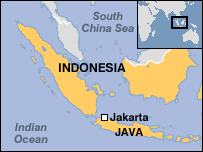
[More than half of Indonesians live on Java, the world's most populous island.]


Pakistan is sixth, followed by:


Nigeria

Bangladesh

Russia

Japan

Mexico

and the Philippines at 100 million.


[The world population is 7.3 Billion].

Thursday, September 25, 2014

World's largest ethnic group without a sovereign state


The KURDS -- all 30 million of them -- are a remarkable people. In the midst of the bloody chaos of Iraq, when American forces departed in 2011, "not a single U.S. soldier had lost his life in Kurdish territory."


As the late Christopher Hitchens described them:
"They’re not Arabs. They don’t speak Arabic. They’re not Turks, they’re not Persians. They’re a unique national group... They live in the rather unpromising neighborhood where Turkey, Iran, Syria, and Iraq meet. It’s not the place you would want to pitch your tent, perhaps, if you wanted a state of their own, but that’s where they’ve lived for thousands of years. So what’s happening is a new nation is being born."

(One of those who formerly opposed the notion of Kurdish independence is Daniel Pipes).


Check out this fascinating essay by Dexter Filkins in the 'New Yorker' about the Kurds in Iraq. Hugh Hewitt interviewed him earlier this week.


Friday, June 27, 2014

Friday BookReview: Dawson's grand brushstrokes of history as if God exists and Christ is its center


"This great central truth (the Christian doctrine of the transformation of human nature in Christ) has been obscured and often forgotten by the religious individualism of the last two or three centuries which conceived salvation as a happy after-life to be attained by pious individuals as a reward of their moral perfections or religious practices. But the Christian idea of salvation is essentially social. It has its roots in the Old Testament in the conception of the People of God and the prophetic teaching of the restoration of Israel and the progressive manifestation of the divine purpose in history... The mystery of the Incarnation is the birth of a new humanity through which man is incorporated into the unity of the Divine Body... All temporal events and all changes in culture are in some way to be related to this central reality." 
                                                            (Christopher Dawson, d. 1970)


Dr. Pence's reaction to Dawson's The Judgment of the Nations:

Armed conflict -- especially with the contest in doubt -- often clarifies for religious men the larger drama shaping the role of nations in God's divine plan. C.S. Lewis' Mere Christianity grew from his radio addresses in England during World War II. Judgment of the Nations by another wartime Englishman, Christopher Dawson, was written from 1938-42.

For Dawson, the cohering principle of national cultures is religion. Thus, he argued that the eleventh-century schism between Latin Catholics and Greek Orthodox, as well as the 16th-century Protestant Reformation, tore asunder the spiritual unity that bound the empires and nations of Europe. The great wars of the twentieth century were the failed attempts of the West to socially organize itself apart from this lost religious center. "The racialist ideology like the Communist ideology... was an attempt to find a substitute for the spiritual reality in some other social element which is primary and indestructible. But Europe... was a spiritual reality and cannot be replaced by a biological or economic unit, for these belong to a different plane of social reality."

Dawson is explicit in a chapter on the failure of the League of Nations. He thought its universalistic tendency (a league of all existing states) was too wide and its real political-military basis (the military supremacy of a small group of founding Powers) too narrow. He argued that "the very idea of international law"... has "its ultimate basis in the belief in a transcendent spiritual order... a natural and divine order to which States and peoples as well as individuals were subject." His emphasis in positing natural law was not its accessibility to human reason but its grounding in the Eternal Law of the spiritual order from whence it springs. Surveying the wreckage of armed atheism, he was unafraid to call for a more solid religious basis for the next international structures of agreement.

His lesson went unheeded. The United Nations was organized by legitimatizing all existing States as equal voting members, rewarding war victors with the Security Council, and positing individual rights as a transcendent. The creature -- the human person with no reference to God -- and some rather dubious States claiming sovereign rights of their own became the twin golden calves of the new international order.

As bleak as this sounds, there is nothing in Dawson that resonates with a contemporary tendency of religious men to retreat from the messy struggle of the nations and the exercise of armed authority. Dawson had learned from Augustine that history is a linear dynamic process ending in the realization of God's purposes. He does not ask us to return to medieval Europe but to understand that once there was a Europe united by a social reality that both allowed and transcended bonds of fatherland, blood, and language in a wider body of nations. Because the Christian view of history "is a contemplation of the Divine irruption in time" this can happen again especially if Christian men do the intellectual work to infuse the nations' discourse with spiritual purpose. This was the basis of the Sword of the Spirit movement modeled after the prophets of Israel who "in all the crises of history that changed the course of history saw the hand of God and for each crisis there was a corresponding Word which it was the mission of the prophet to declare."

What full-throated men were Dawson and Cardinal Arthur Hinsley -- leaders of that movement advocating a total war against the Nazis. "Total" meant a war effort which understood the spiritual stakes of the conflict which if unattended would leave even military victory incomplete. Winston Churchill once said that the only adequate defenders of Britain's war aims were Cardinal Hinsley and himself. How different these men were from the thin-chested orthodox Catholic graduate students today who sip their lattes and find one more scholastic fine point keeping them from their nation's battlefields.


As American evening news has become a mixture of consumer reports and medical updates for individuals, our moral theology has become a list of principles and values accusing history and public actors of being imperfect. The rights revolution is extended to stem cells waving their banners and this is considered deep thinking at Catholic conferences. The purpose of the nations and protective authority is eclipsed. Better to scold the City Fathers to forgo capital punishment and war then to seriously address how to establish civic authority to fight evil at home and abroad.

But the religious awakening in the Islamic Mideast with its deep Shia/Sunni rifts, the great threat to Christians at the fault lines of these popular outpourings, the fall of the Soviet Union, the bizarre inadequacy of the atheist sexual left, the rise of a Christian global South, the mastery by the Asian tigers of the machinery of industry and the market... and their assertion of authoritative Confucian and Asian morality against the intemperance of "Western values": All these await an outpouring of the Spirit, a new spiritual coherence of the Church and a new alignment of the nations.

The "Modern West" is just what Dawson said it would become if it lost its spiritual center. It decayed; it died; and it is rotting. Its name is an unbounded concept of time and space. For it has no defining limits in sacred space or holy season.

In Advent of 2011, a high-status feminist from America visited Geneva and told the nations of the world to glorify the unspeakable; while a high-status feminist from Germany told the nations of Europe to come out speedily with their hands raised high and their national treasuries laid low.


These foes are not as tough as the military forces of Japan, Germany and the Soviets. They reign because we Christian men are decidedly weaker and less magnanimous than the men of Dawson's day. But the fate of the nations is not dependent on men alone.

We await an irruption of the Spirit. As Michael Keating in his forward reminds us: "It was in hope of bringing the compelling Christian vision once more to a western society, that had forgotten God to its own great hurt, that Dawson published the book."

Dawson understood the sinews of old Europe and in this book he championed a new confederation of European nations whose core identities would be Christian. Both West Germany's Adenauer and France's DeGaulle would favor this approach after WWII. In later books Dawson recognized that many more nations of the South and East could be configured under a spiritual banner. He envisioned a new alliance of nations-each with its own vocation. This would no longer be limited to a single region. He foresaw that the Church would once again provide the only truly supranational community which would temper the nations while respecting their organic sacral character. This realization could surely be one of the yet maturing fruits of Vatican II.

The Modern West is dead, but the Church amidst the nations is alive and well. Give thanks for this reissued book and sit with Mr. Dawson anew. The judgment of the nations sharpens the sword of the spirit. The language of Christian historians and foreign policy analysis must become ever more grounded in the spiritual realities which will give light to our day. In the midst of war Professor Dawson knew both the depravity of the enemy and the power of God. On the book's last page, he encourages us: "For the powers of the world formidable as they may appear are blind powers which are working in the dark and which derive their power from negative and destructive forces. They are powerless against the Spirit who is the Lord and Giver of Life."

Wednesday, March 19, 2014

RUSSIA, CRIMEA, AND THE U.S. -- Dithering à la Hamlet while declaiming like Lear


With this map from the 'Washington Post' anchoring us, it's time to decide which experts have best cut to the quick regarding how Americans should view the developments in Ukraine.

Dmitri Simes provides a good perspective on the U.S. government's response to the crisis: speaking loudly and carrying a small stick.

The best five-minute explanation of the ramifications is given here by Professor Stephen Cohen.

Check out these maps at CNN.

And David Brooks, pulled by a troika of Russian philosophers from a century ago, sets forth some of the ideas now animating the new Russia.


"The world is even smaller today, though… across the gulfs and barriers that now divide us, we must remember that there are no permanent enemies. Hostility today is a fact, but it is not a ruling law. The supreme reality of our time is our indivisibility as children of God..."
  (President Kennedy during his visit to Ireland)

Saturday, December 14, 2013

PHYSICAL ECOLOGY: "A failing people, a springless autumn"

It’s always fascinating to check in on current fertility rates around the world. This article from earlier this year explains how the U.S. is now below the 2.1 replacement level.

[The rate is the expected number of children born per woman in her child-bearing years].

With the world average at 2.47, here are some of the laggards:
1.61 – Russia
1.59 – Canada
1.58 – European Union average
1.55 – mainland China
1.48 – Spain
1.42 – Germany
1.41 – Italy and Japan
1.32 – Poland
1.29 – Ukraine
1.24 – South Korea
1.11 – Taiwan
Most of the top countries on the list are African.


"And the last king of the line of Anárion had no heir."
      (Lord of the Rings)

Monday, November 4, 2013

SAUDI ARABIA AND THE U.S.: a growing wariness

Dr. Pence writes:


We have questioned why in the Shiite/Sunni religious war, the United States should work to topple any of the established Shiite states (Iran or the shrinking Alawite state in coastal Syria).

We see much of the continued violence in Iraq as the refusal of Sunni terrorists to accept the elected government of a Shiite majority state. These states may turn out to be the best allies of Christians in the Mid-East and around the world against the Sunni purification movement that we call the “jihadists.” This seems to be the position of Orthodox Russia whom we see as a natural ally in the global reconfiguration occurring today – replete with nationalist actors, Islamic religious alliances, and atheistic globalists.  What is missing are Christian nations understanding themselves as the political forms of Christian civilization who should be major players in proposing a strategy for nations to enhance the tranquility of order.
               

The old arrangement of treating Saudi Arabia as our major Mid-Eastern ally must be radically reconsidered. It is hard to disagree with any of the insights in this long overdue article by Fareed Zakaria.

Saturday, October 5, 2013

Poland: crucified and redeemed

Which country – crucified, as Bishop Sheen put it, “between [the] two thieves” of Nazism and Communism – paid the highest price in that war?  POLAND.


Heinrich Himmler vowed that “all Poles will disappear from the world.”

Of the roughly 40 million Europeans who died in the Second World War, six million were Poles. That is 20 percent of Poland’s pre-war population. 

(A Churchill historian has compared the Polish suffering to a 9/11 attack every single day for five years!)


John Paul II, who was archbishop of Cracow when he was elected pope, declared at the beginning of the Jubilee Year 2000 that the simple nun, Faustina, would be the first to be raised to sainthood. “Where,” the Holy Father asked, “if not in the Divine Mercy, can the world find refuge and the light of hope?”


“Only that soul who wants it will be damned, for God condemns no one.”  (St. Faustina)

Wednesday, September 11, 2013

A Christian Awakening on the Road to Damascus

   
by Dr. David Pence 

President Obama’s decision to seek a congressional resolution to authorize a national military response to the use of chemical weapons in Syria is a credit to his character and a tribute to our deliberative institutions. This is a time for statesmen not to poll the “people,“ but to put up a map and defend or oppose this action in terms of America’s role amidst the nations.  Such debate is why men have tongues and Americans have a Senate.


The conflict in Syria is complex but it is not bewildering. In this debate, men must talk in terms of maps, timelines, and the communal loyalties of religious groups and nation states. We must also talk in terms of our own communal loyalties as Americans. Some will insist foreign policy must be prudentially limited to a defense of “national interest.” Others will assert a national purpose within God’s Providence for mankind; and others will define our policy in terms of an ally’s needs or the “American values“ of modern ideologies.

Despite these very different visions of American identity and foreign policy, all of us benefit from a realistic assessment of the many converging actors on the Syrian battlefield. There are two particular loyalty patterns that all of us must consider in our national deliberation. The first pattern is the emerging religious bond of a generation of young Muslim men often alienated from their homelands who are forging an "extra-territorial identity" as fellow reformers in a fighting Islam. (They call to mind the 19th-century generation of emancipated Jewish men who hammered out their new communal identities in the "fighting faiths" of Zionism in Palestine, and of Marxism throughout Europe and Russia.)

These Muslim men form the worldwide religious purification movement in Sunni Islam associated with Al Qaeda, the Muslim Brotherhood, the Wahhabi tradition, the “jihadists” and a host of variants that see the revitalization of Islamic communal forms as obedience to the will of God in the lands of Islam. Their fathers fought British colonialists, Hindu nationalists, and Soviet communists in the last century; and now the sons depict the United States and Israel as their greatest enemies outside the Muslim fold.  These Sunni purification movements often treat the very notion of a nation state as a Jewish-Crusader imposition of an illegitimate political form on the deeper Islamic communal bond of the caliphate.

For all their hatred and attacks against the “enemy without,” this purification movement is as adamant against the “enemy within."  They include the post-WWII secular nationalist leaders who from Turkey to Egypt to Iraq and Syria created modern police and military states that opposed attempts to return to Islamic patterns of law and governance. These secular governments often employed the minority Christians in high positions of bureaucratic authority.  The heroes of Arab and Turkish nationalism (Nasser and Ataturk) were enemies of the Sunni purification movement.  A Sunni enemy within today is the Hashemite King of Jordan, who sees the protection of Christian communities as an obligation of Muslims.

The other “enemy within” for the Sunni purists are the Shiite Muslims. That split in Islam between Sunni and Shiite is a thousand years old, with the Sunni comprising 85 percent of a billion worldwide Muslims, and 2/3 of Muslims in the Mideast. Almost all Muslim countries are Sunni, and most of them by overwhelming majorities.  There are Shiite majorities in Iran, Iraq, and Azerbaijan.  The Shiites of Lebanon make up about a third of the population. The Lebanese Shiites are the population bases for Hezbollah—another ally of President Assad along with Iran.  The Al Qaeda prolongation of the war in Iraq was as much about a violent multi-country Sunni opposition to the majority Shiites ruling their own country, as it was a fight against American crusaders. The conflict in Syria is set on this same religious fault line.  President Assad and his Alawite clan are identified with the Shiites ruling a nation mostly of Sunnis, as well as ten percent Christians.  If the United States degrades the forces of President Assad, we are entering the Sunni/Shiite “war within” Islam and we are entering on the side of the Sunnis.  Turkey and Saudi Arabia were two Arab countries that supported the US attacking the Assad government at the September 2013 G-20 conference in Saint Petersburg.  They are both dominant Sunni powers. Saudi Arabia is the home of 15 of 19 of the hijackers, and the birthplace of the Sunni purification movement.  No country in the world is so stringent in its denial of Christian worship. There are never burnings and Sunday pillaging of Christian worship in Saudi Arabia, because no public or private Christian services are allowed!  All serious deliberations must address this basic strategic reality. In the Sunni/Shiite “war within,” shall we side with the Sunnis?


The second loyalty pattern we must address is Christianity in the Islamic blood-lands and in post-atheist Russia. The Orthodox bishops of Syria have made it clear they oppose the US “degrading” the Syrian government’s ability to govern. For part of that governance is protecting Syrian Christians from “the people,” whose real grievances against the rule of a clan have turned them into a vicious mob against the Christian allies of that clan.  The Coptic patriarch of Egypt has taken a similar, very public, position. He formally supported the military coup in Egypt against the Muslim Brotherhood. The Copts now face the daily violence of aggrieved mobs. The Egyptian military, like the Syrian military, has not established police control of the nation. Nor has either government enacted a political compromise with its own religiously-driven citizens. In both cases their incomplete ability to enforce the Law has been deadly for indigenous Christians who have no state of their own to protect them.

Russia has a deep historical tie to the Orthodox Christians of the Mideast. That protective role was a major impetus of the Crimean War in the mid-1850s. The fact that the British and French governments did not recognize a similar duty, and sided with Ottoman Turks against Christian Russia, does not diminish the religious motivations of pre-Communist Russia. Orthodox Christians have always had a robust view of the dynamic of Church and State. In some circumstances this has deeply compromised them. In many other historical circumstances it has been a more realistic and liberating approach to the world of political and military authority. In defending Christians, Russia has also become the defender of Shiite States from the Sunni purification movements. Their link to President Assad and Syria as well as Iran cannot be understood merely through the narrow economic prism of “warm water ports.”

The battle between the atheistic Soviet Union and Christian America colored every conflict of the 20th century. Mother Russia is just emerging from her atheistic Gulag, which demoralized the character of her people and submerged the nation in the imperial designs of Marxist ideology and historical materialism.  An armed America under God defeated the armed atheism that disfigured Russia. But in our victory, we have been subverted by the unarmed atheism of consumer materialism and sexual license which threaten our national soul. A reformed Christian America could still extend to Orthodox Russia a hand of brotherhood to awaken from the atheist nightmare of these bloody centuries. 

Neo-conservatives and leftists alike denounce Russia and President Putin, while Saudi Arabia and the Saud family remain our strange longstanding ally.  A Christian awakening might at least force debate on this peculiar arrangement. This debate must particularly shake Protestant America, which has never resonated with the sufferings of the more ancient forms of Christianity. The persecution of Catholics in the Philippines, Mexico, and Vietnam -- and of the Orthodox in Russia, Serbia, and the Mideast -- has never compelled the public sympathy of Christian America in our dominant Protestant phase. A single heroic Baptist missionary, John Birch, became a banner of courage and martyrdom while the Armenian national Church (a million Orthodox murdered to initiate the bloody 20th century) ranks hardly a mention. Christian unity evokes some painful memories.


It is hard for American statesmen to conduct our nation’s affairs with a realistic and humble eye toward Providence. Our newspapers no longer use such language. Our schools have lost that vocabulary. Public culture bans national prayers, and substitutes a daily trivializing of God’s Name by major media and craven teen-age girls. Instead of reviving a serious fraternity of nations with Russian patriots, Patriarchs, and their President in Petersburg, we extend a kiss of peace to homosexual activists practicing a very different form of brotherly love. There is a Christian path to peace, which baptizes the nations as the public communities of law and authority that order men as communal peacemakers. The fantasy world of atheism has always feared and undermined this spiritual martial anthropology of masculine accord.  Religious realism recognizes the Sovereignty of one God and the multiple public communal forms of brotherhood known as nations.

Religious realism in foreign policy recognizes that most nations and men act out of self-interest.  But not all men or nations define their communal lives so narrowly.  A Christian nation seeks a fraternal relationship with other nations as common sons of Adam. This is not a pacifist path nor a self-centered one.  The nation animated by moral purposes is in continual search of new patterns of agreement with the men of other nations. The moral nation is just as assuredly in continual conflict with tyrants and criminals.      

Forty years ago President Richard Nixon and National Security adviser Henry Kissinger unfolded a large map, and employed a corresponding sense of large history, to remove the Vietnam War as the principal battlefield of conflict between Communist ideology and the United States. Their move to diplomatic accord with China upset the Soviet map of eastern alliances, which was later shrunk again when Muslim men led the first successful war of national liberation from the South against the Soviets in Afghanistan.  The final disintegration came with the military resurgence of America, and the Catholic awakening on their western front in Poland. Today we need to look again at a larger map, and the deeper religious and national loyalties that move men and nations to fight for one way of life against another.  The unarmed dissipating public atheism of American life has blinded us to our most natural allies in the fight for order and authority in the service of religious liberty. Our atheism has perverted our sense of what practices we must defend and what cults we must abhor. Our conduct of foreign policy -- as if God does not exist -- is erroneously enacted in the name of realism.  For there is no realism absent Providence.  The materialist worldview is a fantasy -- a bloody ideology -- which can only be overcome by a larger, more comprehensive, view of men and nations as spiritual actors in a Divine Drama.

Two thousand years ago, a zealous avenger radically reversed his actions and goals on the road to Damascus. May our national debate be enlightened by the Light of Christ to look at the larger map, and consider more deeply the possible agreements that could restore a new fraternity among the nations.  Let us love the Lord our God and let us love our neighbors. We will fulfill those commands through mature agreements among nations and states -- much more readily than by seeking out the protesters, the adolescents, and the libertines.  Diplomacy between nation states will not bring us complete peace.  The Sunni purification movement still attacks, and Satan roams the world in many costumes.  But true strategic diplomacy, much more than a missile attack, can (if God wills it) align the proper set of peacemakers for this historical moment.


Saul of Tarsus surrendered his prudential powers of justice to his zeal for punishment. The lightning strike chastened his wrath, and his repentance restored his eyesight. Congressional deliberation is meant to discipline our zeal for justice with prudence in how to get there. It is time to heed this Biblical lesson of ordering the virtues.

Let us deliberate. Let us repent. Should we Americans disarm one of the last Shiite states capable of fighting the Sunni drive for armed purification?  Should we leave the Syrian Christians to a fate more violent than the Iraqi Christians?  Should we provoke a retaliatory war with the largest standing Shiite government: the Iranians? Should we forsake serious negotiations and a new fraternity with Orthodox Russia in order to degrade an already disintegrating Syrian state? If our goals are regional stability and religious liberty, what new alliance should we forge? What new state or old state should we foster to protect the different religious groups in the Holy Land? How shall a Christian nation from afar safeguard our Christian neighbors in the Mideast? They see our public prayers and the awakening of Christian unity among the baptized, but they beg for the protection of a Christian state wielding an effective sword. These questions are not asked by pollsters. Congressmen must debate them in long well-attended speeches.

Our Congress now properly deliberates and our President may prayerfully negotiate. On the road to Damascus, let us recall a bolt of lightning that blinded a punishing zealot, and be chastised again by the haunting words he heard:  “Saul, Saul, why are you persecuting me?”